Publication Date: November 13, 2026
Access counts:0
“Invisible Magnet” Enables Electric Current Control
-A New Principle of Current Control Opens the Door to Ultra-Compact, Energy-Efficient, High-Performance Devices-
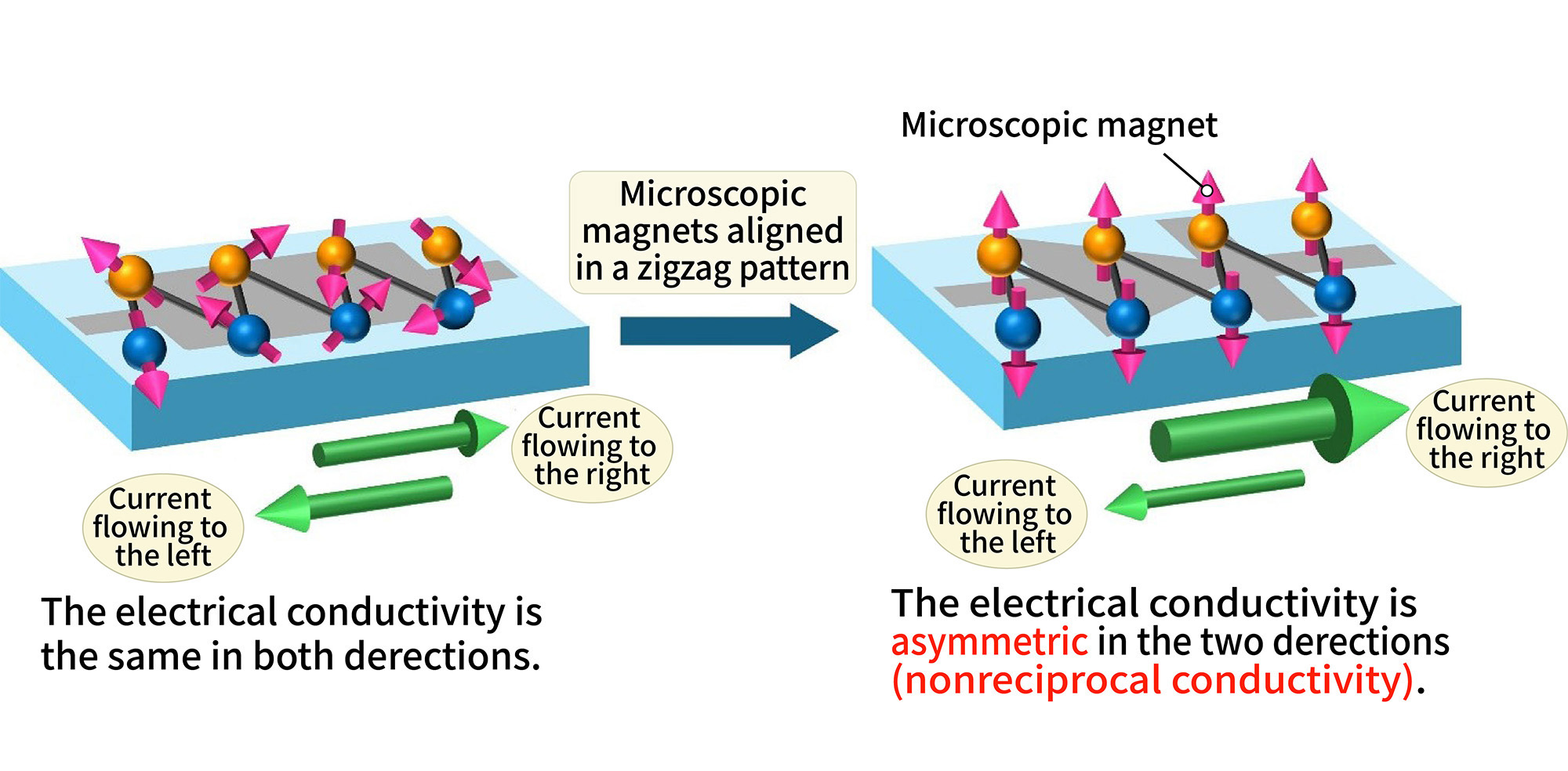
Fig. 1 Schematic illustration of nonreciprocal conduction arising from the
zigzag arrangement of microscopic magnets (spins)
In this study, we observed nonreciprocal transport, in which the flow of electric current is preferentially directed in one direction without applying an external magnetic field, in a metal whose electron spins (microscopic magnets) are arranged in a zigzag pattern. The material investigated was the neodymium-ruthenium-aluminum compound NdRu2Al10. At low temperatures, the electron spins form an antiferromagnetic state with an alternating arrangement, generating microscopic magnetic fields within the material and causing the electrical conductivity to become direction dependent.
We found that this effect (the difference in electrical conductivity between the two opposite directions) is more than 1,000 times larger than previously observed nonreciprocal transport induced by an external magnetic field. Importantly, this is the first demonstration of such a large nonreciprocal response in a single metallic material without an external magnetic field. Furthermore, by investigating the direction of nonreciprocal transport in microscopic regions of the crystal, we demonstrated that differences in the underlying spin arrangements can be detected electrically.
These findings provide a new measurement principle for probing the magnetic states of antiferromagnetic materials and may pave the way for future applications in energy-efficient, ultra-compact devices and next-generation spintronics.
This work was published in Physical Review Letters and selected for the Editors’ Suggestion and Featured in Physics highlights.

Comments on This Article
Share your comments or feedback on this article using the comment form.