Publication Date: November 12, 2026
Access counts:0
Separation of Gram-Scale Minor Actinides From High-Level Radioactive Liquid Waste
-Toward Waste Volume Reduction, Hazard Mitigation, and Resource Recovery-
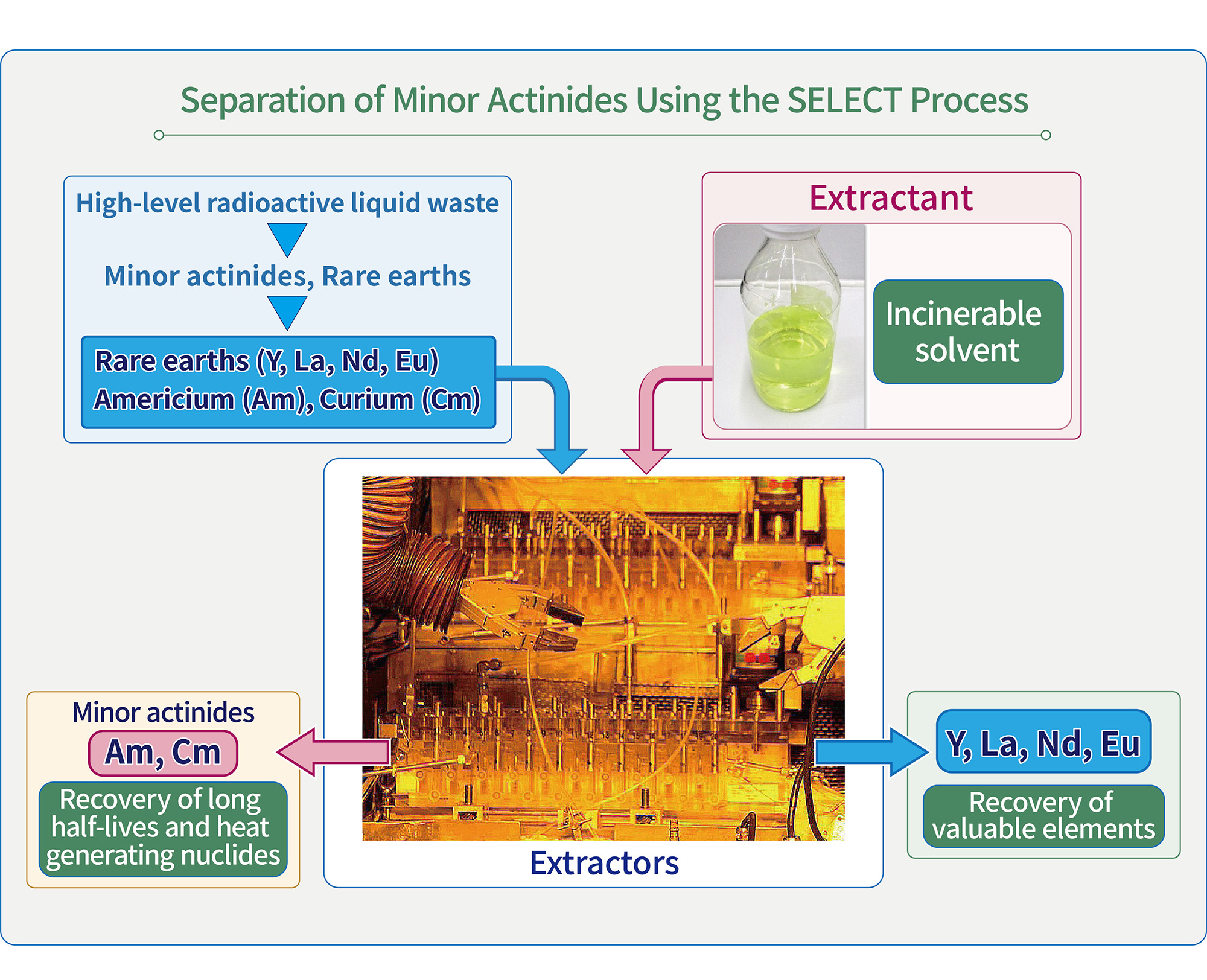
Fig. 1 Separation test of minor actinides from high-level liquid waste by solvent extraction
The treatment of high-level radioactive liquid waste (HLLW) generated during the reprocessing of spent nuclear fuel is one of the key challenges for the sustainable use of nuclear energy. HLLW contains various elements, including americium (Am) and curium (Cm), known as minor actinides. Because some isotopes of these elements have long half-lives and generate significant heat, their separation is an important research objective. To address this issue, the NXR Development Center and Nuclear Science and Engineering Center have been developing the SELECT (Solvent Extraction from Liquid-waste using Extractants of CHON-type for Transmutation) process, a solvent extraction process that integrates reprocessing and minor actinide separation (Fig. 1).
In this study, we demonstrated the effectiveness of the SELECT process by separating approximately 0.3 g of minor actinides from HLLW. Because the extractant used herein comprises only carbon, hydrogen, oxygen, and nitrogen, it can be incinerated, which may reduce the volume of secondary waste. Although minor actinide separation by solvent extraction has been studied in several countries, separation at this scale has rarely been reported.
HLLW also contains valuable elements, including rare metals and medical radioisotopes. Future development of the SELECT process will therefore explore reprocessing and minor actinide separation as well as the recovery of these valuable elements from HLLW.

Comments on This Article
Share your comments or feedback on this article using the comment form.