 |
||
|
 |
||
|
| Cellulosic wastes generated in a huge amount all over the world
can be a threat to the earth's environment. Aiming at effective
utilization of resources and preservation of the environment,
we are studying in collaboration with Malaysian Institute of Nuclear
Science and Technologies (MINST) to produce animal feeds from
oil palm wastes after radiation disinfection followed by adequate
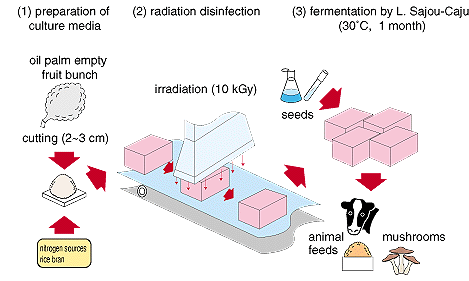
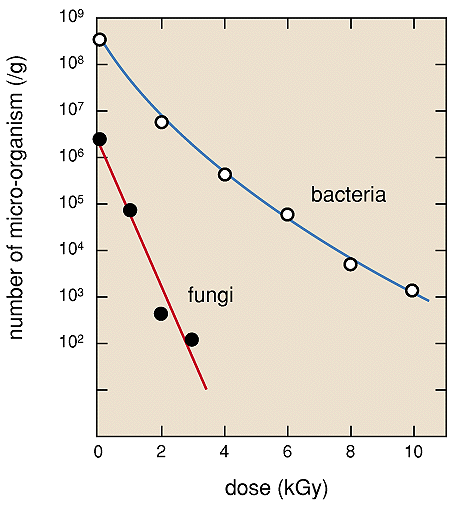
fermentation. Malaysia, the world's foremost palm-oil producing country generates cellulosic wastes such as empty fruit bunch (EFB) and others after harvesting in an amount of larger than 6 million tons/year. They are too hard even for ruminants to digest and need to be fermented to be used as animal feed. For the fermentation to be performed it is necessary to remove micro-organisms that would prevent it. Radiation sterilization using electron beams or gamma-rays is a reliable and suitable method for continuous treatment of large amount of wastes. At present JAERI and MINST are engaging in a pilot-scale plant test with 10 tons/month for technical evaluation. |
| Reference
T. Kume, Effective Utilization of Agricultual Wastes by Radiations, Radiat. Industries 67, 17 (1995). |
| Select a topic in left column |  |
|
Persistent Quest-Research Activities 1996 Copyright(c)Japan Atomic Energy Research Institute |