Publication Date: May 20, 2026
Access counts:0
Estimating Depositional Age From the Accumulated Dose of Minerals
-Establishing a Chronological Framework of Marine Terraces Using Optically Stimulated Luminescence Dating-
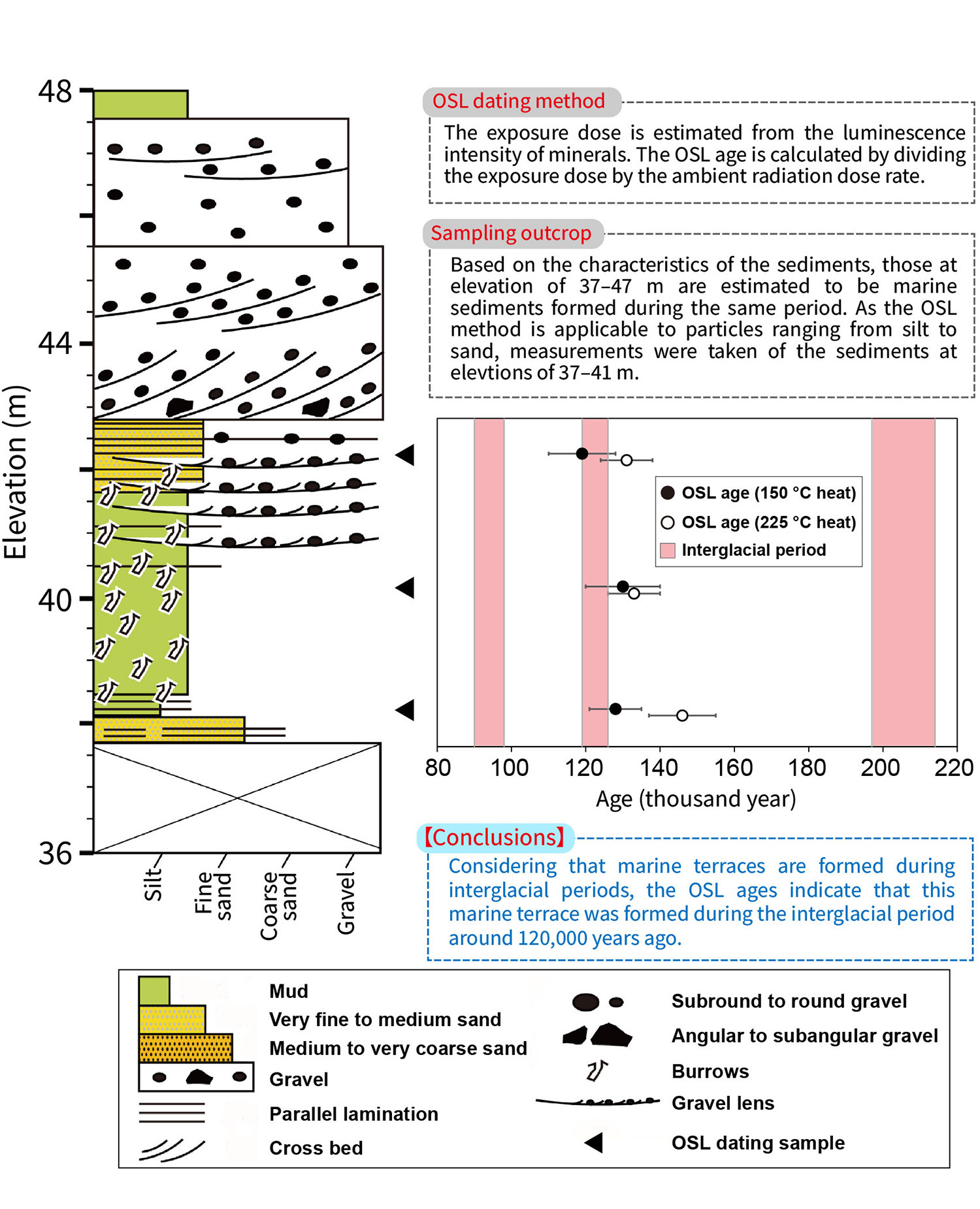
Fig. 1 Columnar section of the sampled outcrop and ages determined by optically stimulated luminescence dating
Marine terraces widely distributed along Japan’s coastline are formed by regional uplift. Unraveling their formation history helps in estimating the uplift rate, which is necessary in geological disposal. To understand their fromation history, stratigraphic methods are employed to estimate the sequence of formation based on the number, elevation, and structure of terraces. However, because this approach alone does not yield absolute ages, developing dating methods that can establish a chronological framework to the estimated sequence remains an important challenge.
In recent years, optically stimulated luminescence (OSL) dating, a method for determining age based on the accumulated dose of minerals, has attracted attention for resolving this issue. Since OSL signals are reset by exposure to sunlight, the method can be used to estimate the depositional age of sediments under the assumption that mineral grains were exposed to light during transport prior to burial. At present, no other methods can directly measure the formation age; thus, OSL dating is considered effective for establishing the chronological framework of marine terraces.
To demonstrate its effectiveness, we conducted a study on marine terraces of the Kii Peninsula, which had been tentatively estimated from stratigraphic evidence to have formed during an interglacial period around 120,000 years ago. The OSL dating results indicate that the terrace was formed during this interglacial period, thereby providing a more robust understanding of the formation history of marine terraces in the Kii Peninsula.
In the future, we will continue to use OSL dating to study the formation histories of marine terraces across Japan.

If you have any comments or feedback about this page, please click the button to share your thoughts with us.