Publication Date: April 8, 2026
Access counts:0
Simple and Rapid Method for Geochemically Discriminating of Paleotsunami Deposits Using a Portable X-Ray Fluorescence Spectrometry System
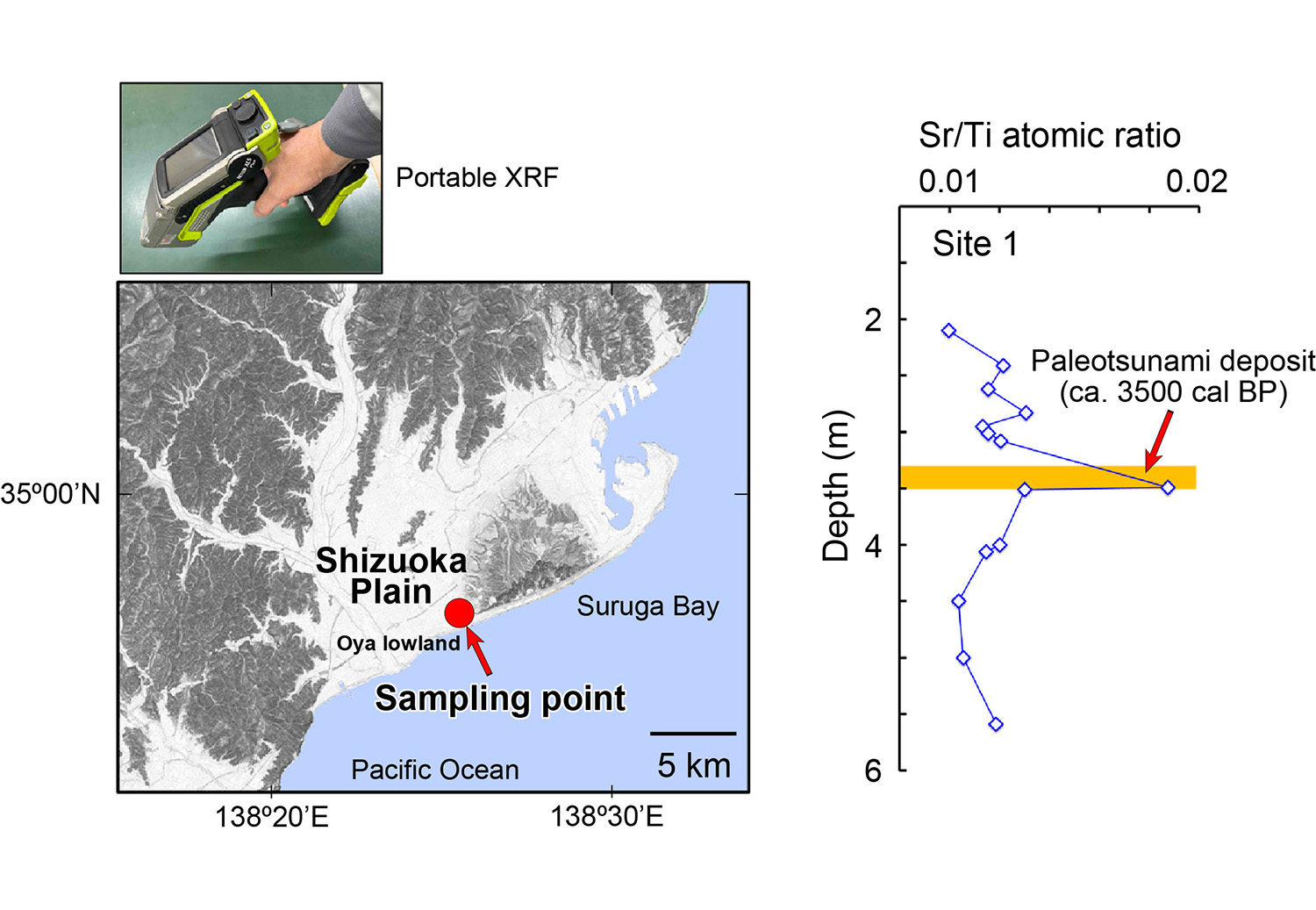
Fig. 1 Depth profiles of trace elements in the Site-1 boring core from the Oya lowland, Shizuoka Plain (Ti-normalized values; measured with a portable XRF)
Yellow bar denotes layer with paleotsunami deposit aged ca. 3500 cal BP.
For disaster prevention, it is important to estimate the scale of earthquakes and tsunamis that may occur in the future. Paleotsunami deposits provide critical evidence for reconstructing past marine incursions triggered by earthquakes and tsunamis. To improve methods for discriminating paleotsunami deposits, quantitative analyses of major and trace elements in boring cores from the Shizuoka Plain on the Pacific coast of central Japan were conducted using a portable energy-dispersive X-ray fluorescence spectrometry system (portable XRF). Geochemical approaches using portable XRF contribute to the development of simple and rapid methods for detecting paleotsunami deposits.
In this study, the geochemical characteristics of paleotsunami deposits from the Shizuoka Plain were examined. Elevated values of geochemical proxies (e.g., Sr/Ti atomic ratios) were detected in paleotsunami deposit layers aged ca. 3500 cal BP (Fig. 1). Therefore, a portable XRF analyzer is a useful tool for characterizing paleotsunami deposits from the Shizuoka Plain. Because the chemical characteristics of the deposits vary by region and also change over time within the same region, it is important to continue accumulating geochemical data for each region.
It is expected that this method will be widely applied in the future and contribute to the characterization and discrimination of paleotsunami deposits.

If you have any comments or feedback about this page, please click the button to share your thoughts with us.