Publication Date: December 9, 2025
Access counts:0
Development of a Glass Melter as a Countermeasure for Platinum Group Metal Accumulation
-Progress in Decommissioning the Tokai Reprocessing Plant-
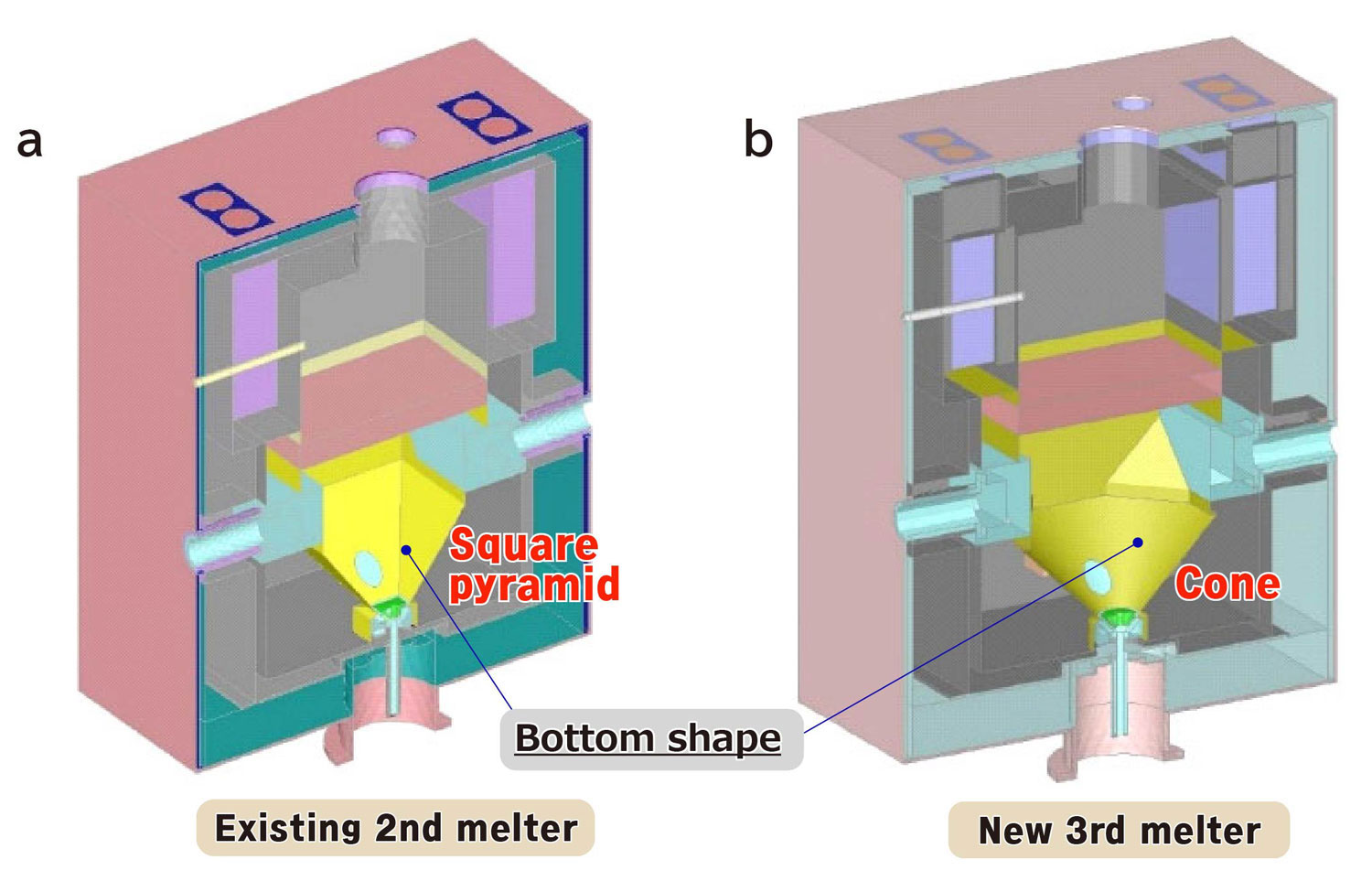
Fig. 1 Basic structure of the TVF glass melter: (a) existing 2nd melter and (b) new 3rd melter
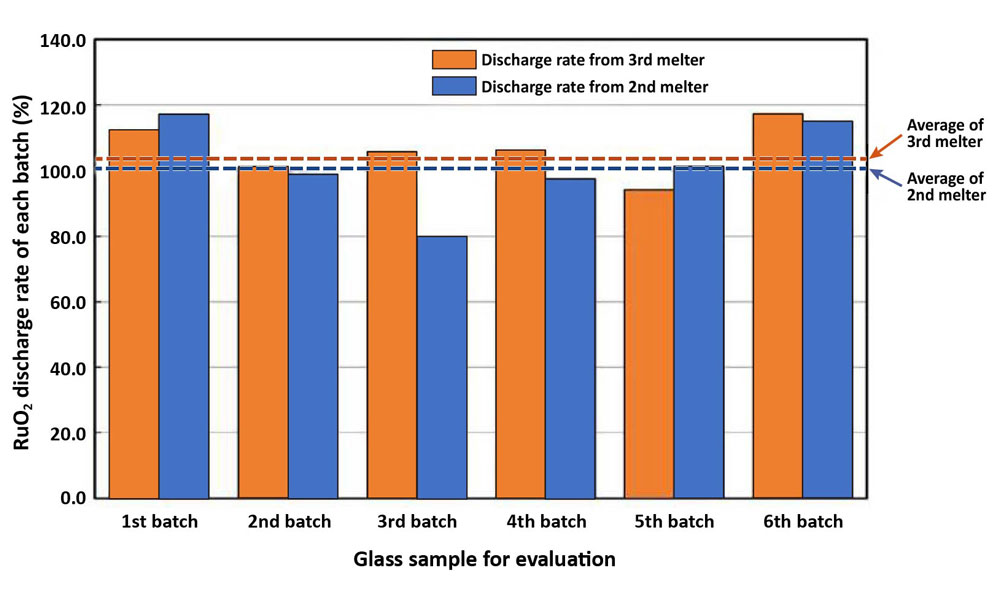
Fig. 2 Comparison of RuO2 emission
To continue moving forward in decommissioning the Tokai Reprocessing Plant, safe and steady vitrification of any remaining high-level radioactive liquid waste is very important.
At the Tokai Vitrification Facility, TVF, issues in operations due to the square pyramid shape of the conventional glass melters (1st and 2nd) were observed. The pyramid shape resulted in the accumulation of platinum group metals (Ru, Rh, Pd) from high-level radioactive liquid waste at the furnace bottom, which subsequently affected melter operations. To address this issue, fluid visualization experiments using simulated molten glass fluids and simulation analysis of melter operations were conducted. From the results, the design of the bottom shape in the new melter, the 3rd melter, was changed from a square pyramid to a cone shape (Fig. 1). Performance tests were carried out to verify operation conditions of the 3rd melter, and noble metal elements were confirmed to be less likely to remain in the melter and were smoothly discharged compared to previous melters. This provides a promising outlook for future stable operation (Fig. 2).
Looking ahead, installation of the 3rd melter at TVF is scheduled for early 2026, with operations expected to begin later that year.

Asahi, Y., Tone, M. et al., Experimental Verification of Operational Conditions for the 3rd Glass Melter in TVF, JAEA-Technology 2024-024, 2025, 271p. (in Japanese).
If you have any comments or feedback about this page, please click the button to share your thoughts with us.