Publication Date: December 2, 2025
Access counts:0
Prediction of the Coolant Behavior in Fuel Assembly Using Detailed Numerical Simulation
-Confirmation of Calculation Accuracy with Test Data of Simulated Fuel Assembly-
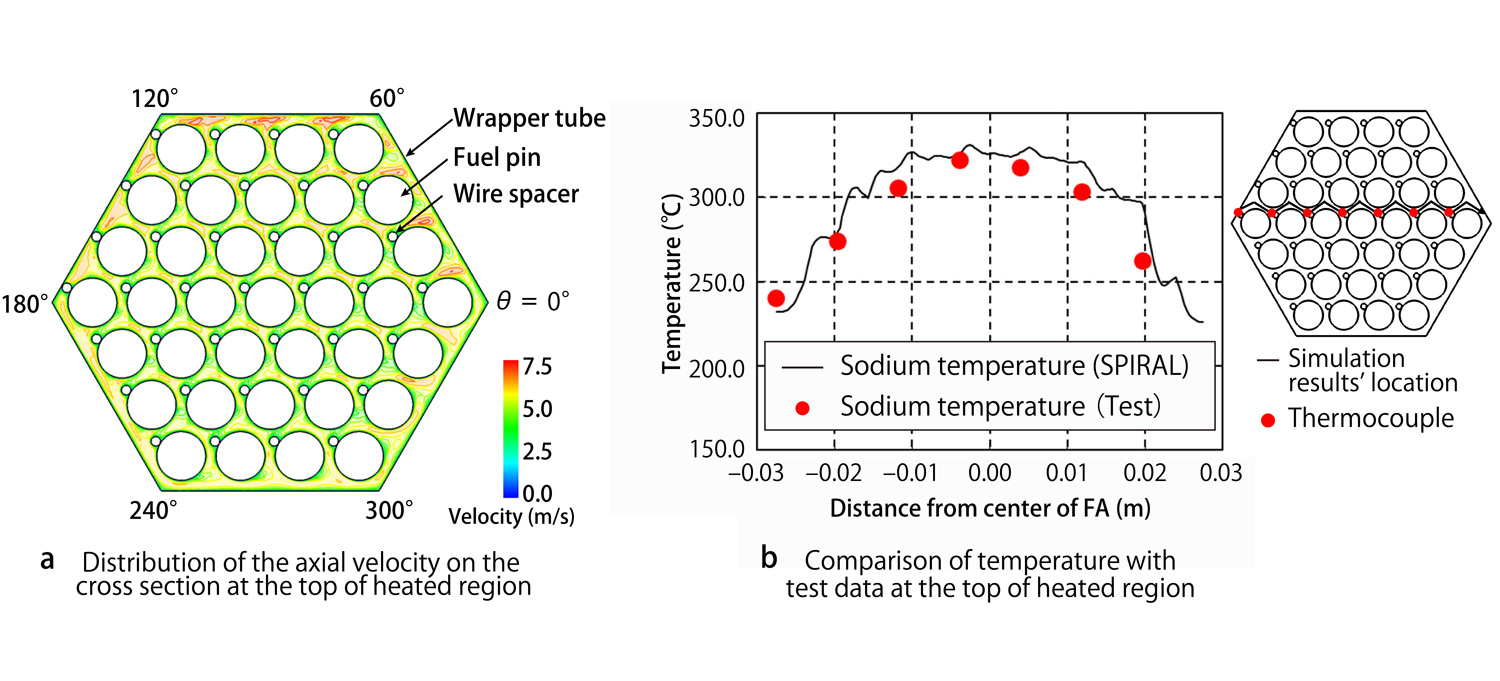
Fig. 1 Simulation results of simulated fuel assembly
In a fuel assembly (FA) of sodium-cooled fast reactor (SFR), hundreds of fuel elements (pins) with the spirally wound wire spacers are enclosed within a hexagonal wrapper tube in a triangular arrangement. The coolant of liquid sodium enters the FA from the inlet nozzle at its bottom and is heated by the fuel pins. The sodium flows upwards along the fuel pin with wire spacer and finally flows out from the outlet at top of the FA. For the safety evaluation of an FA in SFR core design, the numerical simulation tools are required to clarify the thermal hydraulic phenomena of coolant in an FA under various conditions from rated operation to the shutdown state in which the heat generated by the decay of radioactive materials must be removed.
In JAEA, a numerical analysis code named SPIRAL has been developed to predict thermal hydraulic behavior in an FA. As an activity of the validation study of the SPIRAL, numerical analyses were carried out on the FA tests with 37 simulated fuel pins of a practical SFR. The simulation result of temperature distribution as shown in Fig. 1b was consistent with the measured data. In addition, Fig. 1a shows the axial velocity distribution on a horizontal cross section, which was difficult to measure in the tests. By using these results, thermal hydraulic phenomena in the FA could be reasonably explained.
It is expected for the SPIRAL to numerically predict the thermal hydraulic phenomena in the FA under various conditions, which are required in the FA designs and safety evaluations, by accumulating various validation studies to increase its reliability.

If you have any comments or feedback about this page, please click the button to share your thoughts with us.