Publication Date: February 17, 2026
Access counts:0
Development of Japanese Polygon Mesh-Type Human Models for Accurate Dose Assessment
-Human Model Data Made Available for Free-
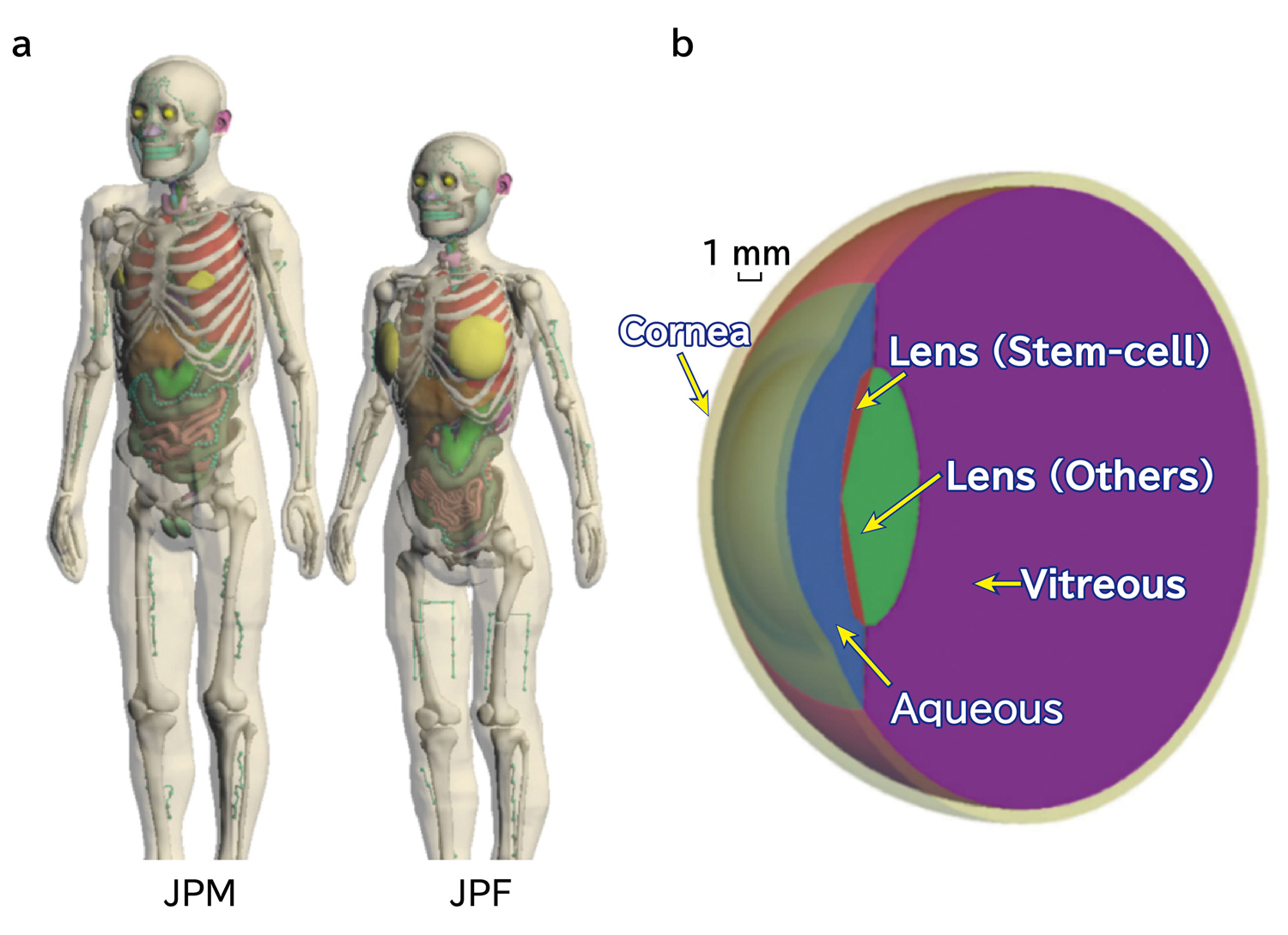
Fig. 1 Polygon mesh-type human models
(a) Anterior view of the whole body and (b) a 3D cross-sectional view of the detailed eyeball tissue model
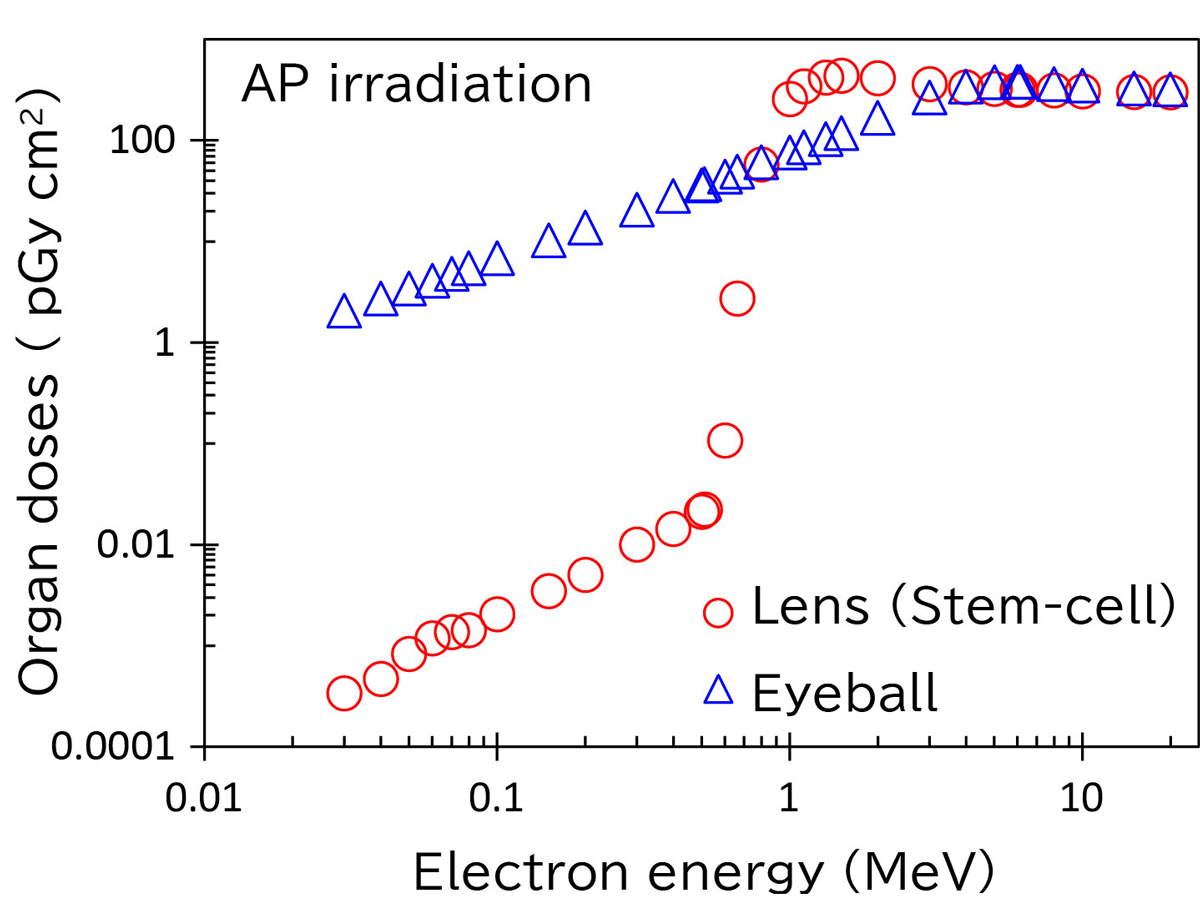
Fig. 2 Organ dose of eyeball tissues for electron incidents in the AP geometry on the JPF model
To accurately assess radiation exposure doses, it is necessary to consider the detailed behavior of radiation within the body. Therefore, computational methods combining human models with Monte Carlo simulation codes, such as PHITS, are highly useful. The International Commission on Radiological Protection (ICRP) has updated its recommendations regarding the effects of radiation on highly radiosensitive stem-cell regions and has lowered the dose limit for the lens. However, since previous Japanese human models did not define stem-cell regions, they could not be used to evaluate lens dose.
In this study, we developed new polygon mesh-type average adult Japanese male (JPM) and female (JPF) human models using polygonal techniques, which allow flexible representation of object shapes (Fig. 1a). The lens, skin, oral mucosa, tongue, esophagus, stomach, small intestine, colon, bronchi, and urinary bladder in the JPM and JPF models incorporate stem-cell regions with complex, fine-scale structures (Fig. 1b). These definitions enable calculation of accurate organ doses that reflect those complex and fine-scale structures. Figure 2 shows the organ dose to the eyeball (spherical) and to the lens stem-cell region (thin, disc-shaped) in the JPF model when electrons are incident from the anterior direction. Dose variations arising from differences in the shapes and structures of both organs were observed.
We are currently developing deformation techniques to modify JPM and JPF posture and body size. These deformation techniques are expected to improve exposure-dose management for medical staff and patients during treatment, and for workers in radiation accidents. The electronic data for JPM and JPF are freely available online* and may be used without formal procedures.
* Japanese human model's public homepage: https://github.com/JapanesePolygonPhantom/JPM-JPF-Phantom

If you have any comments or feedback about this page, please click the button to share your thoughts with us.