Publication Date: January 23, 2026
Access counts:0
Development of a Dissolution Method for Analyzing the Elemental Composition of Fuel Debris Using the Sodium-Peroxide Fusion Technique
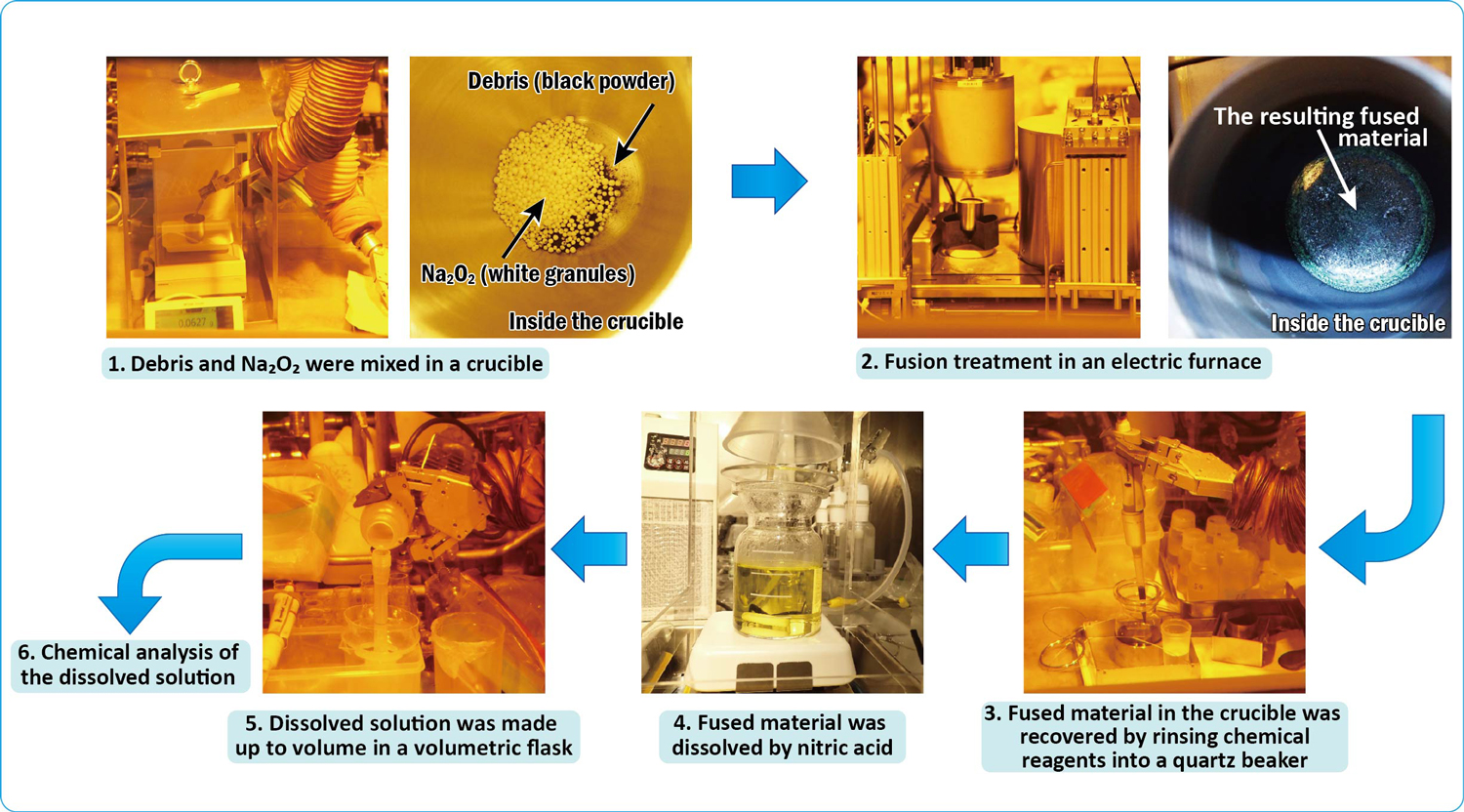
Fig. 1 Scheme of the demonstration tests with TMI-2 debris in a shielded concrete cell
As a pretreatment for the chemical analysis, it is crucial to dissolve the fuel debris to estimate the elemental and nuclide compositions with high accuracy. However, because fuel debris comprises chemically stable ceramic components, such as oxides, borides, and various alloys, it is barely soluble in nitric acid. In this study, we focus on alkaline fusion using sodium peroxide (Na2O2) as the fusing flux. This method has been applied in chemical analysis in the nuclear field as well as for the analysis of materials similar to fuel debris.
In the present work, after studying dissolution methods with various types of simulated debris, a demonstration test with Three Mile Island Unit 2 (TMI-2) debris was conducted. First, we focused on zirconia, the least soluble component of fuel debris in nitric acid, and a solid solution of zirconium oxide and rare-earth oxides ((Zr,RE)O2) was fused with Na2O2 at different temperatures in Ni crucibles to determine the optimum temperature. Then, fusion with Na2O2 was performed in crucibles of several different materials under the optimum temperature. Subsequently, a series of experiments was conducted using molten core-concrete interaction (MCCI) products that were more representative of actual fuel debris. The objective was to examine the influence of leached elements on analysis and to assess the applicability of the method to MCCI samples using various inexpensive crucibles. The results suggested that Ni crucibles at 923 K provide the optimum testing condition.
The optimum testing condition was then applied in demonstration tests with TMI-2 debris in a shielded concrete cell at the NUclear fuel Cycle safety Engineering research Facility (NUCEF) of the Nuclear Science Research Institute (Fig. 1), thereby achieving complete dissolution of the debris. The elemental composition of TMI-2 debris obtained using the proposed dissolution method showed good reproducibility and only insignificant deviations in the mass balance of the sample. Therefore, this newly developed, reproducible dissolution method can be effectively utilized in practical applications for dissolving fuel debris and estimating its elemental composition.

If you have any comments or feedback about this page, please click the button to share your thoughts with us.