Publication Date: February 18, 2026
Access counts:0
Assembly of a Uranium-Iron Rechargeable Battery
-Maximizing Synergy of Renewable Energy Sources by Converting Depleted Uranium Into a Resource-
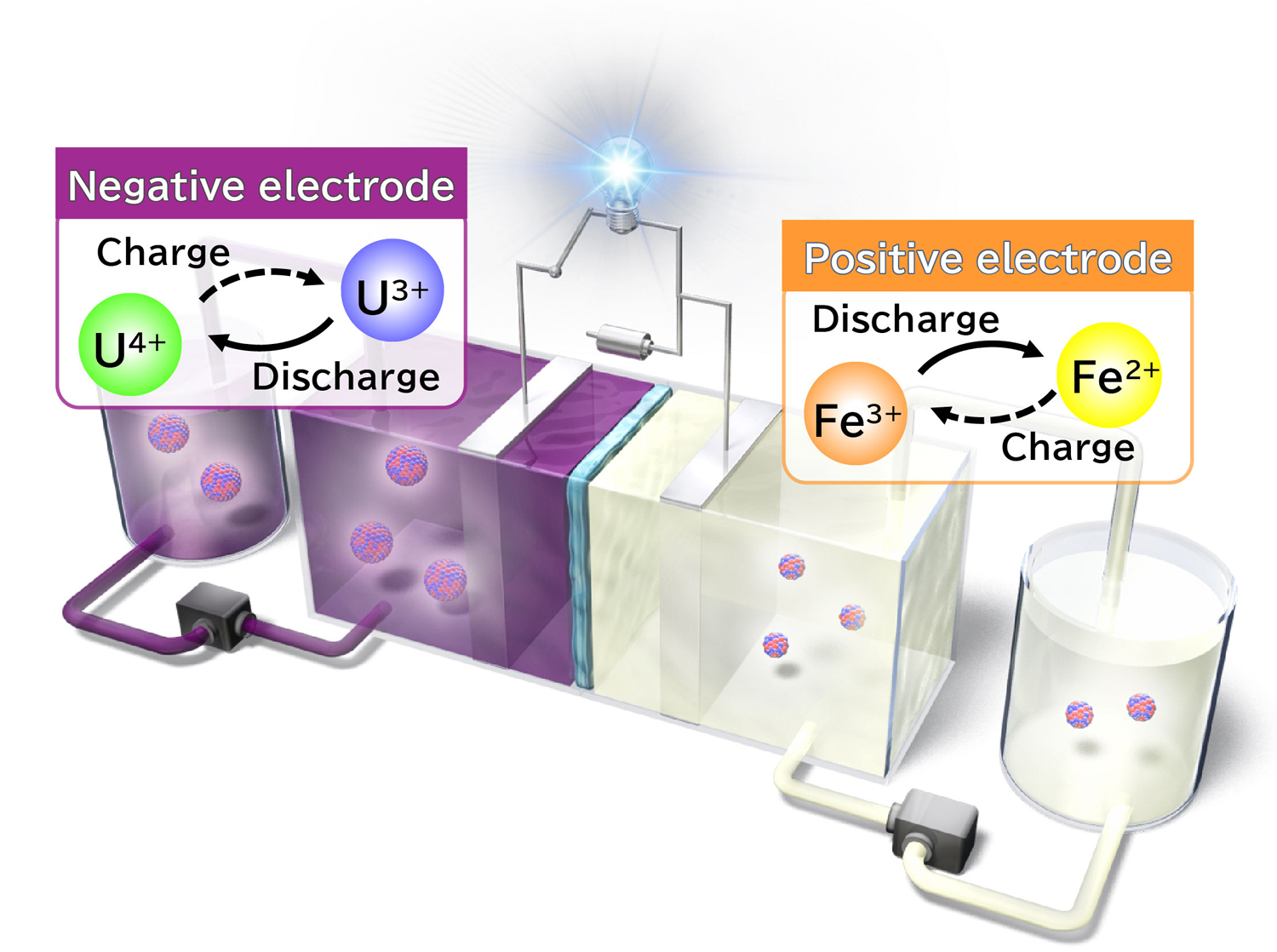
Fig. 1 Concept of a uranium-iron rechargeable battery
During nuclear fuel production, “depleted uranium (DU)” is generated as a byproduct. Since DU cannot be used as fuel in current nuclear reactors (light water reactors), approximately 16,000 tons of DU are stored in Japan. Seeking to utilize DU as a new resource, the concept of developing rechargeable batteries that use uranium was proposed in the early 2000s. However, no studies on the actual construction of such rechargeable batteries or reports on their performance are available.
In this study, a uranium-iron rechargeable battery (uranium rechargeable battery) was developed for the first time, and its charging-discharging performance is reported here. The uranium rechargeable battery utilizes a uranium solution as the negative electrode active material and an iron solution as the positive electrode active material. Cell voltage of the prototype uranium rechargeable battery was 1.3 V, which is close to that of a common alkaline battery (1.5 V). The battery was charged and discharged 10 times, and battery performance remained largely unchanged, indicating relatively stable cycling characteristics.
If the capacity of the uranium rechargeable batteries can be increased and the batteries put into practical use, the abundant DU stored in Japan could become a new resource. Furthermore, the batteries could serve as an output control for the electricity supply grid derived from renewable energy, further contributing to the realization of a decarbonized society.

If you have any comments or feedback about this page, please click the button to share your thoughts with us.