Publication Date: December 3, 2025
Access counts:0
Eliminate Obstacles for High Intensity Beams
-Stabilizing Beams Using High Voltage-Resistant Diodes-
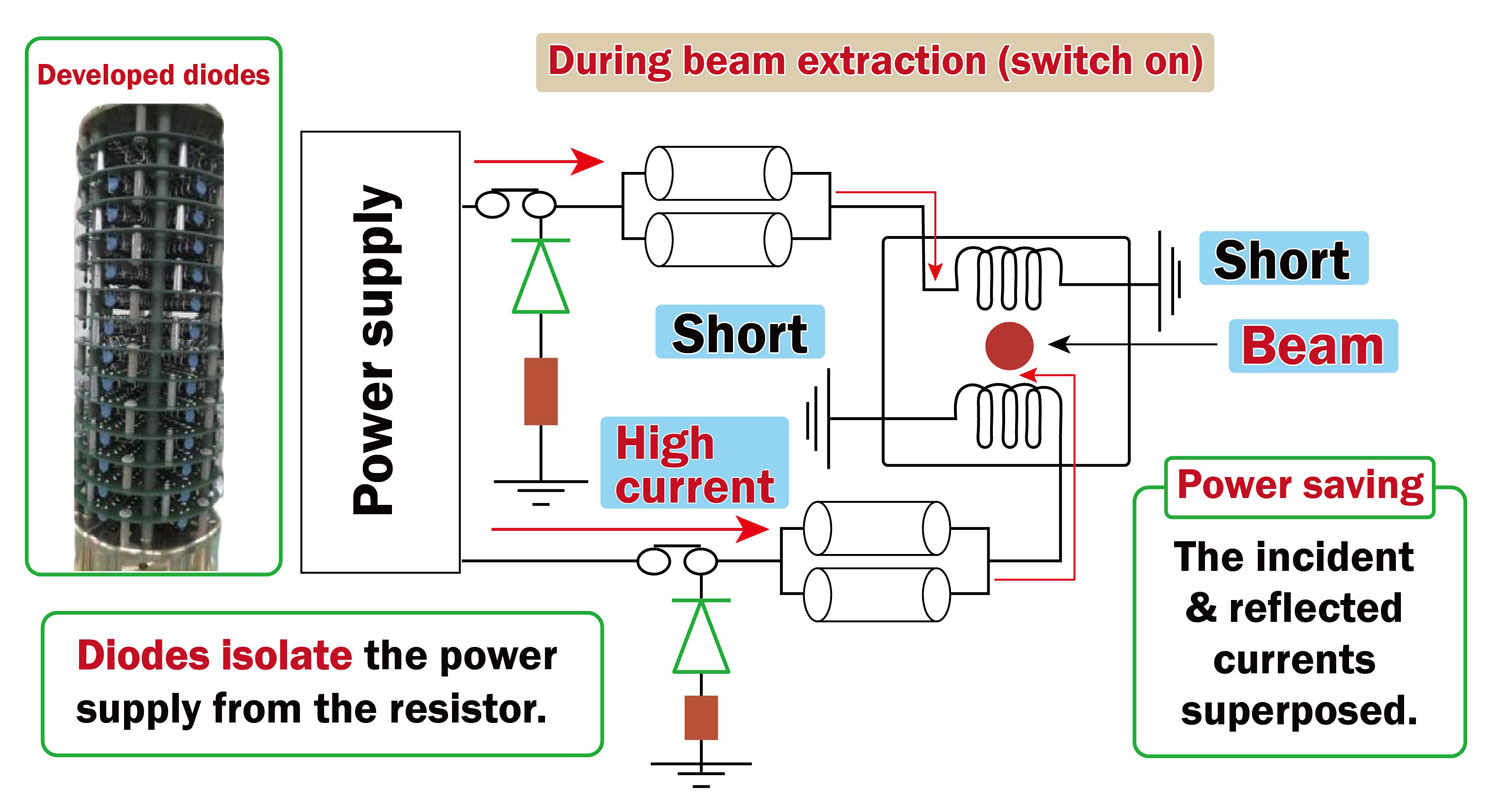
Fig. 1 Function of the diodes during beam extraction
J-PARC, one of the world’s leading high-intensity accelerator complexes, consists of a linear accelerator, a 3 GeV rapid cycling synchrotron (RCS), a main ring, and the Materials and Life Science Experimental Facility (MLF), among others. The RCS delivers beams to the MLF by accelerating high-intensity two-proton bunches containing approximately 8.3 × 10¹³ particles to 97 % of the speed of light within 20 ms. However, beam instabilities induced by the kicker magnets pose a significant challenge to high-intensity operation.
A kicker magnet (hereafter referred to as the kicker) extracts the beam from the RCS by supplying a high current of approximately 3 kA from the power supply to the coils inside the magnet. One end of the kicker terminals is shorted to superpose the incident and reflected currents (Fig. 1), thereby reducing power consumption. However, since the beam passes through the kicker during acceleration, the beam-induced currents in the kicker coils generate magnetic fields that lead to beam instability.
A typical countermeasure to suppress these instabilities is to connect resistors in parallel with the kicker. However, this approach negates the energy-saving advantage of the kicker because part of the supply current is dissipated through the resistors.
To address this problem, newly developed high-voltage-resistant diodes have been introduced between the resistors and the terminal ends (Fig. 1). This configuration isolates the power source from the resistors while allowing only the beam-induced current to flow into the resistors and dissipate (Fig. 1). As a result, the beam is stabilized without increasing power consumption.
This notable achievement was recognized by the American Physical Society, which selected it as an Editor’s Suggestion article.

If you have any comments or feedback about this page, please click the button to share your thoughts with us.