Publication Date: March 27, 2026
Access counts:0
Minimizing Proton Beam Loss at High-Intensity Output Beyond the Design Limits
-Towards Stable Operation of Next Generation Multi-MW-Class Accelerators-
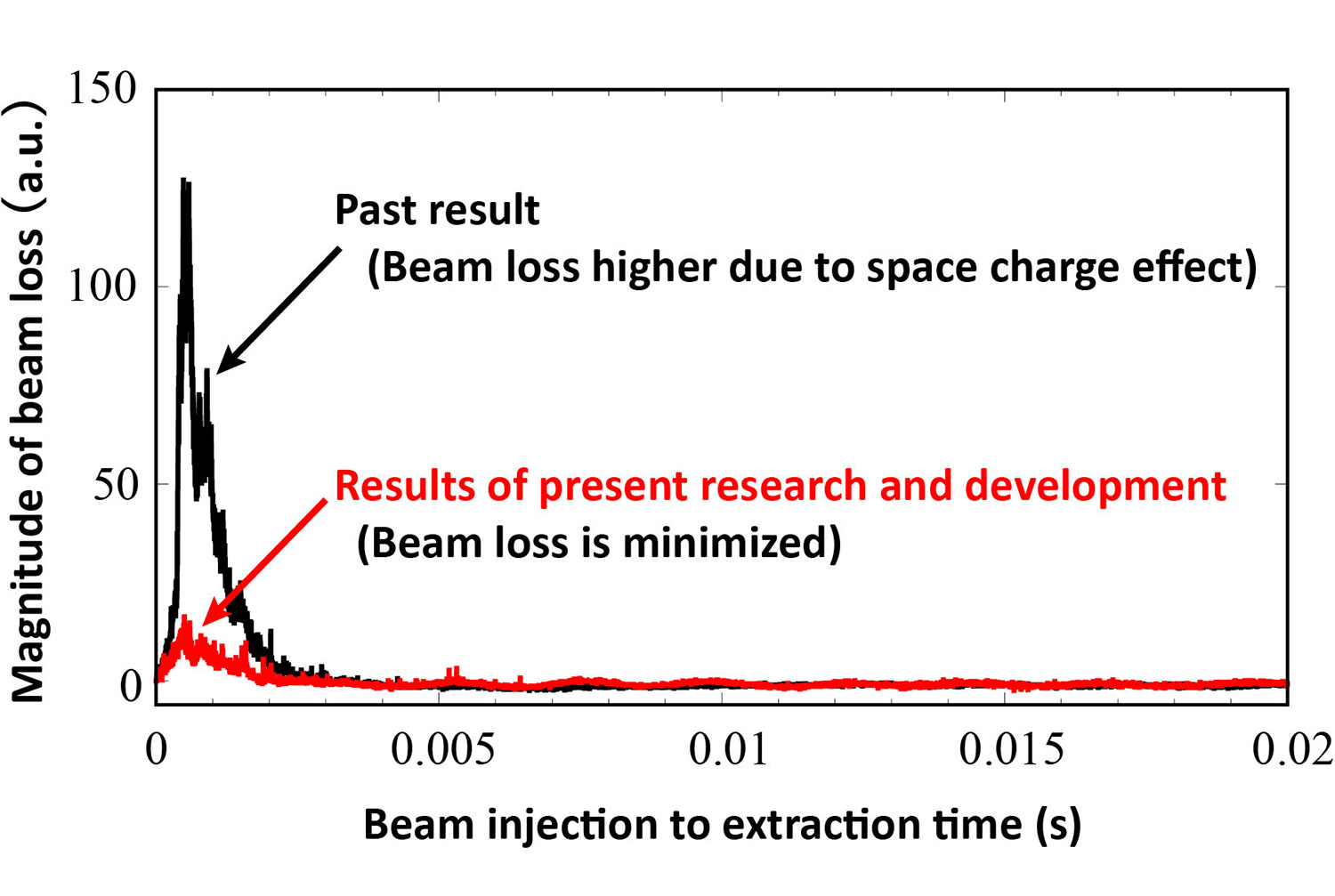
Fig. 1 Results of reducing beam loss at 1 MW operation
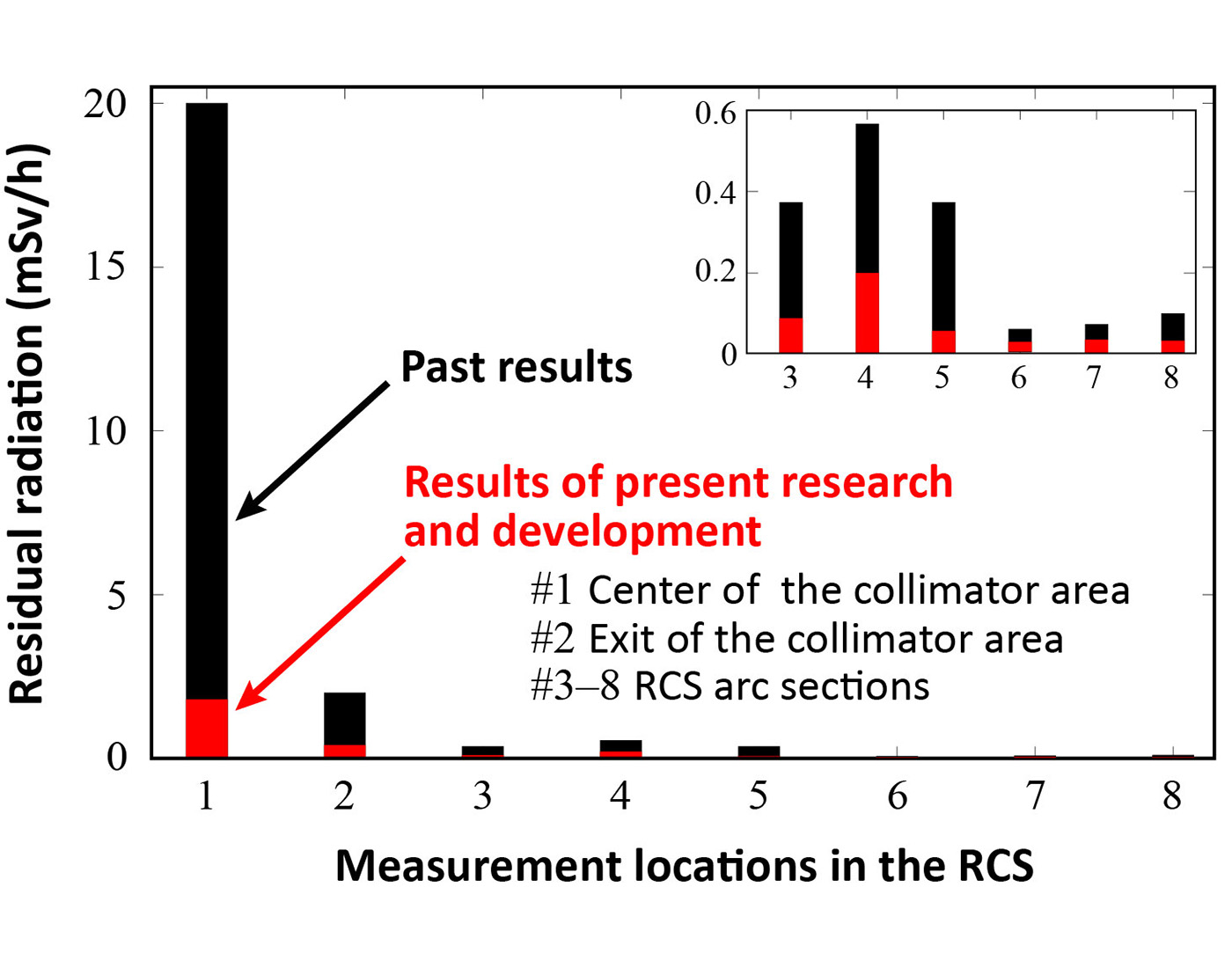
Fig. 2 Minimization and localization of residual radiation dose in this research
The 3-GeV Rapid Cycling Synchrotron (RCS) of the Japan Proton Accelerator Research Complex (J-PARC) delivers world’s highest class high-intensity 1 MW proton beam to multi-user experimental facilities. The injected beam energy is 0.4 GeV, which is accelerated to 3 GeV at a repetition rate of 25 Hz. The beam loss mitigation and its localization, especially in a high intensity synchrotron are extremely difficult causing higher residual radiation done far beyond the design constraint, thus limiting the machine performance and resulting the biggest challenge to realize sustainable operation. This becomes further difficult for a multi-user machine, like J-PARC RCS, owing to maintaining different beam parameters simultaneously.
Based on systematic numerical simulations and beam tests, this research achieves a breakthrough in minimizing and localizing the beam loss at the designed 1 MW beam power and beyond. Since RCS utilizes multi-turn charge-exchange injection of the H− (negative hydrogen) beam by using a carbon foil, the uncontrolled beam loss due to foil scattering of the circulating beam is one of the serious issues. First, such a beam loss was minimized by reducing the foil size and optimizing the injection beam to fit on the foil. Next, remaining all other beam loss sources caused by the space charge (SC) effects are clearly identified and implemented appropriate measures. The SC effect is the Coulomb repulsion between beam particles because of same charge forcing the beam trapping on many resonances at high intensity, resulting a significant increase of the beam size and beam halos. The SC effect in the J-PARC RCS is particularly serious not only because of high intensity beam, but also due to a lower injection energy of 0.4 GeV.
The optimizations of the SC effect include effective manipulations of the beam in both time and space domains during injection process producing uniform beam distribution by reducing the charge density. The beam motion gets stable by reducing unexpected growth of the beam size and beam halos. The beam loss is minimized, occurring only at lower beam energy and perfectly localized in the collimator area (Fig. 1). The residual beam loss power is estimated to be only 0.1 kW, remarkably lower than 4 kW limit. The residual radiation dose is accordingly reduced for realizing sustainable operation of the RCS at 1 MW with a record high of more than 98 % availability (Fig. 2). The present research has also been successfully extended to ramp up RCS beam power over 1 MW, required to cope with demands and upgrades of the user facilities soon.
This work drew attention to American Physical Society selecting it as an Editors’ Suggestion article.

If you have any comments or feedback about this page, please click the button to share your thoughts with us.