Publication Date: March 31, 2026
Access counts:0
Development of a Focusing Neutron Supermirror for GISANS Measurements
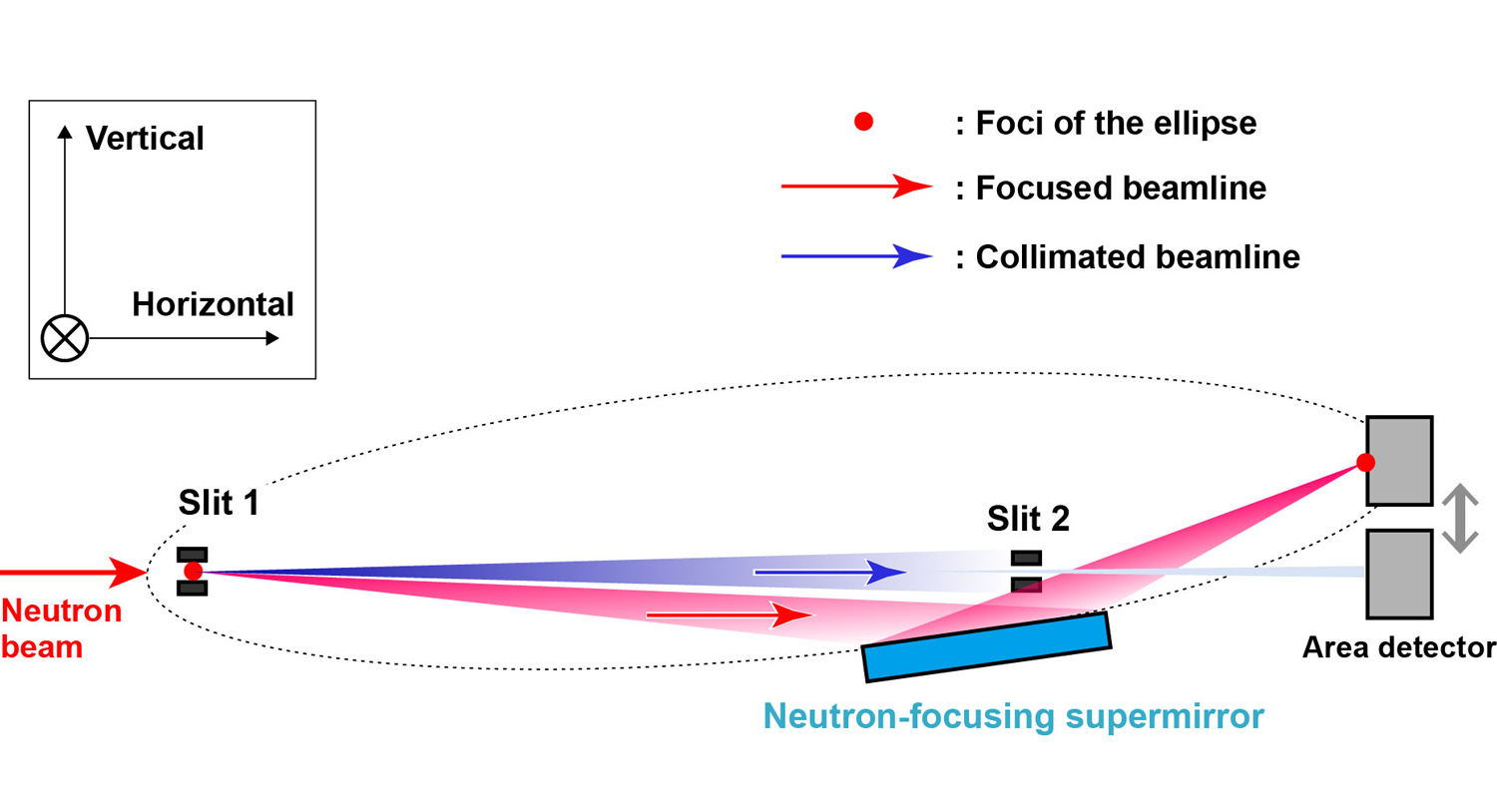
Fig. 1 Conceptual geometry of neutron focusing and slit collimation
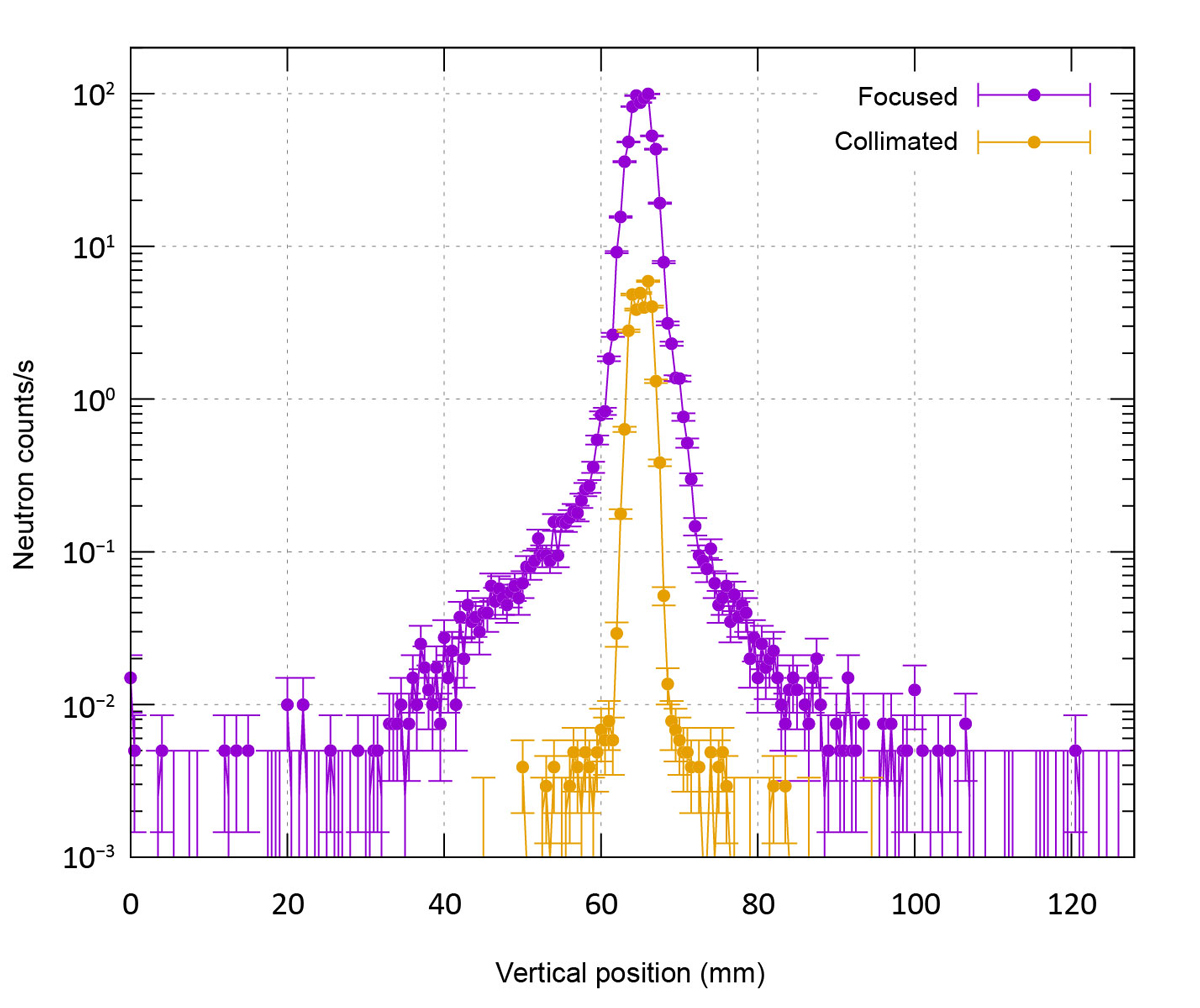
Fig. 2 Neutron intensities of the focused beam and the optimally collimated one
GISANS (Grazing-Incidence Small-Angle Neutron Scattering) is an experimental method to investigate the structure of surfaces and interfaces of material, by irradiating the object with a very narrow, pencil-shaped neutron beam. Many neutrons are needed to obtain a clear structure. However, strictly narrowing the neutron beam with beam slits severely reduces intensity.
In this study, a neutron-focusing supermirror that converts a divergent neutron beam into a very narrow beam, which dramatically increases its intensity, was developed (Fig. 1). As a result, we could successfully obtain a focused neutron beam with wavelengths more than 0.23 nm, enhancing intensity by 20-fold with little neutron scattering from the mirror (Fig. 2).
The neutron focusing supermirror is multi-layered, composed of more than 1,000 alternating layers of nickel-and-carbon and titanium, nanometers in thickness. The supermirror was deposited on the surface of fused quartz that is elliptically shaped and well-polished. This shape is based on the geometric properties of an ellipse, which state that a light ray (or a neutron ray) emitted from one focus is specularly reflected to the other focus. We have been developing neutron supermirrors with high neutron reflectivity and very low diffuse scattering, and plan to carry out more efficient experiments that exploit neutron beams.

If you have any comments or feedback about this page, please click the button to share your thoughts with us.