Publication Date: January 29, 2026
Access counts:0
Removal of Radioactive Cesium Strongly Fixed in Soil
-Aiming to Reduce the Final Disposal Volume of Removed Soil-
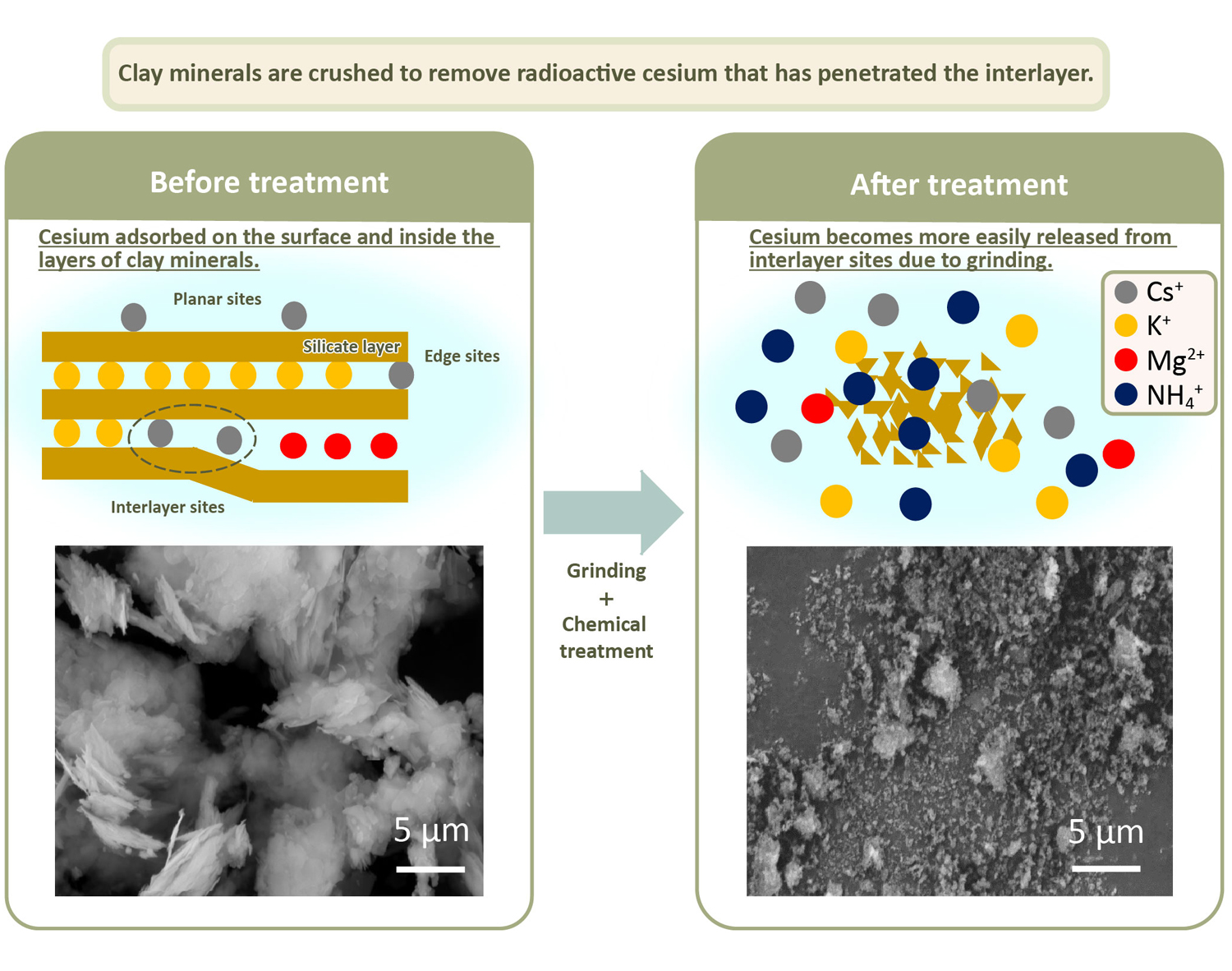
Fig. 1 Adsorption of radioactive cesium on clay minerals and a mechanochemical desorption model (top),
and SEM images of clay minerals before and after mechanochemical treatment (bottom)
Decontamination work following the accident at TEPCO's Fukushima Daiichi Nuclear Power Station has resulted in the production of large amounts of soil containing radioactive cesium (hereinafter referred to as removed soil). The removed soil must be finally disposed of outside Fukushima Prefecture by 2045. Since a reuse of the removed soil is permitted when the radioactive cesium concentration is below 8,000 Bq/kg, it is an important issue to reduce the amount of highly contaminated soil and minimize the total volume requiring final disposal. However, most of the radioactive cesium is adsorbed within the interlayers of clay minerals (layered silicates) in the soil, and because it is located at core sites that other cations can hardly reach, it is difficult to be removed (Fig. 1, top).
We investigated the desorption characteristics of cesium in clay mineral samples using the mechanochemical (MC) method, which combines mechanical grinding during ball milling with chemical treatment. Among the various MC treatments using different reagents, it was found that the use of ammonium chloride solution, which has an ionic radius comparable to that of cesium, caused the clay mineral particles to become finer (Fig. 1, bottom) and achieved a high cesium desorption rate of over 80 % even for actual soil samples contaminated with radioactive cesium.
The results of this research demonstrate a simple and effective approach for desorbing radioactive cesium from soil and are expected to significantly reduce a large volume of the removed soil requiring final disposal. Future work will involve utilizing synchrotron radiation analysis at SPring-8 to verify the cesium adsorption state within the interlayer spaces of the MC-treated clay minerals.

If you have any comments or feedback about this page, please click the button to share your thoughts with us.