Publication Date: March 24, 2026
Access counts:0
Experimental Simulation of Criticality Characteristics of Fuel Debris
-Critical Experiments for Fuel Debris Simulation Using the Static Experiment Critical Facility “STACY”-
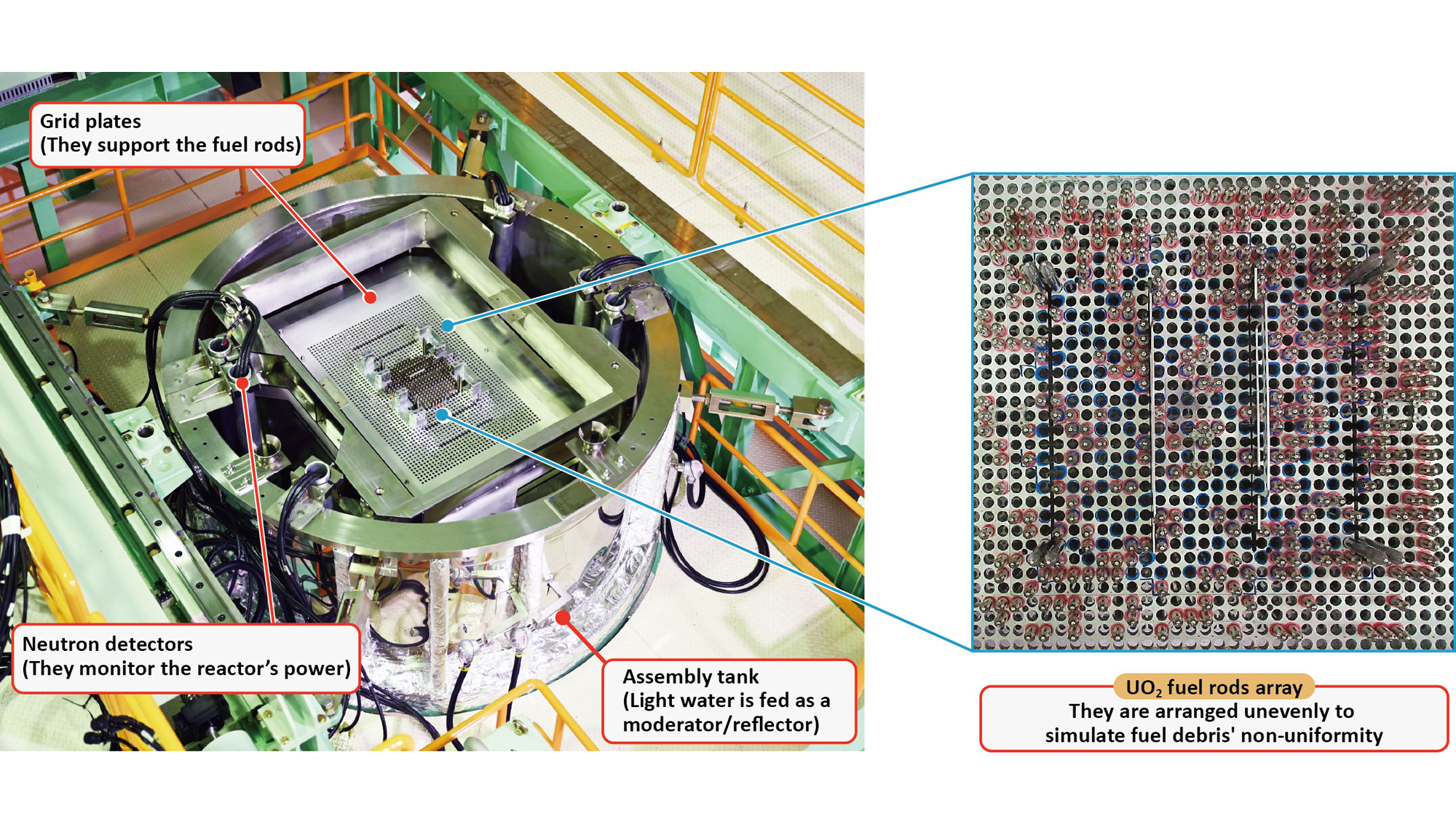
Fig. 1 Overview of the static experiment critical facility "STACY" and a core arrangement to simulate fuel debris’ non-uniformity
When handling fuel debris during decommissioning work at Tokyo Electric Power Company's Fukushima Daiichi Nuclear Power Plant, it is important to evaluate the criticality characteristics of the fuel debris from the perspective of risk reduction. The Composition and properties of fuel debris are estimated to vary widely depending on the generation process. Criticality characteristics have been comprehensively evaluated through computational analysis and compiled into a database. However, validation of such computational analysis for non-uniform compositions that include structural materials, is needed. This is because, although the validity of such computation has been confirmed through criticality experiments, there are no experimental results that simulate fuel debris yet.
Therefore, in order to validate the computational analysis, JAEA modified the Static Experiment Critical Facility (STACY) to accommodate a light water-moderated heterogeneous system and prepared simulants of concrete and steel structural materials to conduct critical experiments that simulate fuel debris (see Figure 1). In the series of critical experiments, the effects of the total amount loaded and arrangement of concrete and steel on the criticality characteristics were evaluated while considering the uncertainties of the experiments. In addition, the extent to which changes in the non-uniform composition affect the criticality characteristics were experimentally confirmed. As a result, the computational analysis was found to well reproduce these experiments.
JAEA plans to utilize the results of this research using STACY to advance its studies on how to conduct appropriate risk assessments, such as radiation exposure assessment in case of criticality events, when handling fuel debris.

If you have any comments or feedback about this page, please click the button to share your thoughts with us.