Publication Date: March 3, 2026
Access counts:0
Simplifying Difficult Analysis with Theory: Development of a Theoretical Scaling Factor Method
-Application to Cs-135-
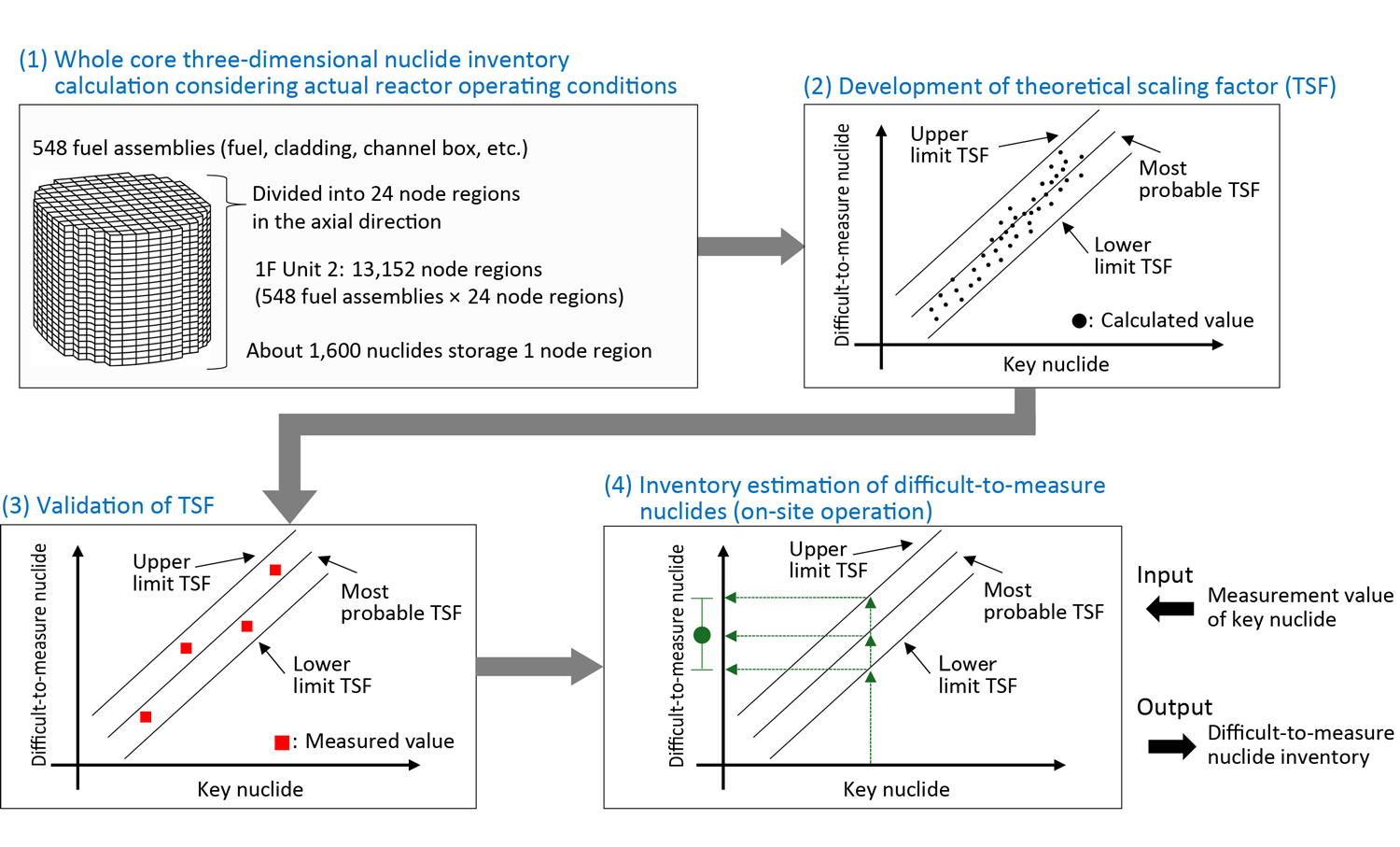
Fig. 1 Nuclide inventory estimation process using the theoretical scaling factor (TSF) method
The scaling factor method is one of the approaches to estimate the inventory (mass or radioactivity) of difficult-to-measure nuclides in radioactive waste. In the conventional scaling factor method, a correlation between easy-to-measure nuclide (key nuclide) and difficult-to-measure one is determined in advance by collecting a large number of nuclide analyses. These correlations, together with the measured values of key nuclides, are then used to estimate the inventory of the difficult-to-measure nuclides. However, this method requires the accumulation of extensive nuclide analysis data to establish reliable correlation, and its application to diverse fuel debris, for which dissolution and analysis are difficult, is not straightforward.
In this study, a new approach called the Theoretical Scaling Factor (TSF) method was developed to rationalize and improve efficiency of nuclide inventory estimation for fuel debris generated by the TEPCO’s Fukushima Daiichi Nuclear Power Station (1F) accident (Fig. 1). The TSF method uses detailed inventory calculation results instead of nuclide analyses to derive correlation equations that consider fuel melting and mixing processes specific to fuel debris. These correlations are referred to as “TSF.”
The main features of this method are: (1) utilization of highly reliable three-dimensional core nuclide inventory data immediately before the accident, (2) consideration of the melting and mixing of fuels with different burnup, (3) theoretical estimation, as far as possible, of the most probable, upper, and lower limits of nuclide correlations, and (4) when the results obtained using the TSF method are compared with newly available assay data, verification of reliability of the new data. The estimation procedure of the TSF method varies depending on the target nuclide, and some trial and error is required.
To date, the TSF method has been applied to Cs-135 (key nuclide: Cs-137), a long-lived, difficult-to-measure nuclide with importance in the back-end field (Fig. 2, see the details section). Estimation results obtained by the TSF method showed good agreement with environmental sample measurements related to the 1F accident, confirming validity of the approach. In the future, extending application of the TSF method to actinide nuclides that are considered to originate from fuel debris is planned.
Click to view details
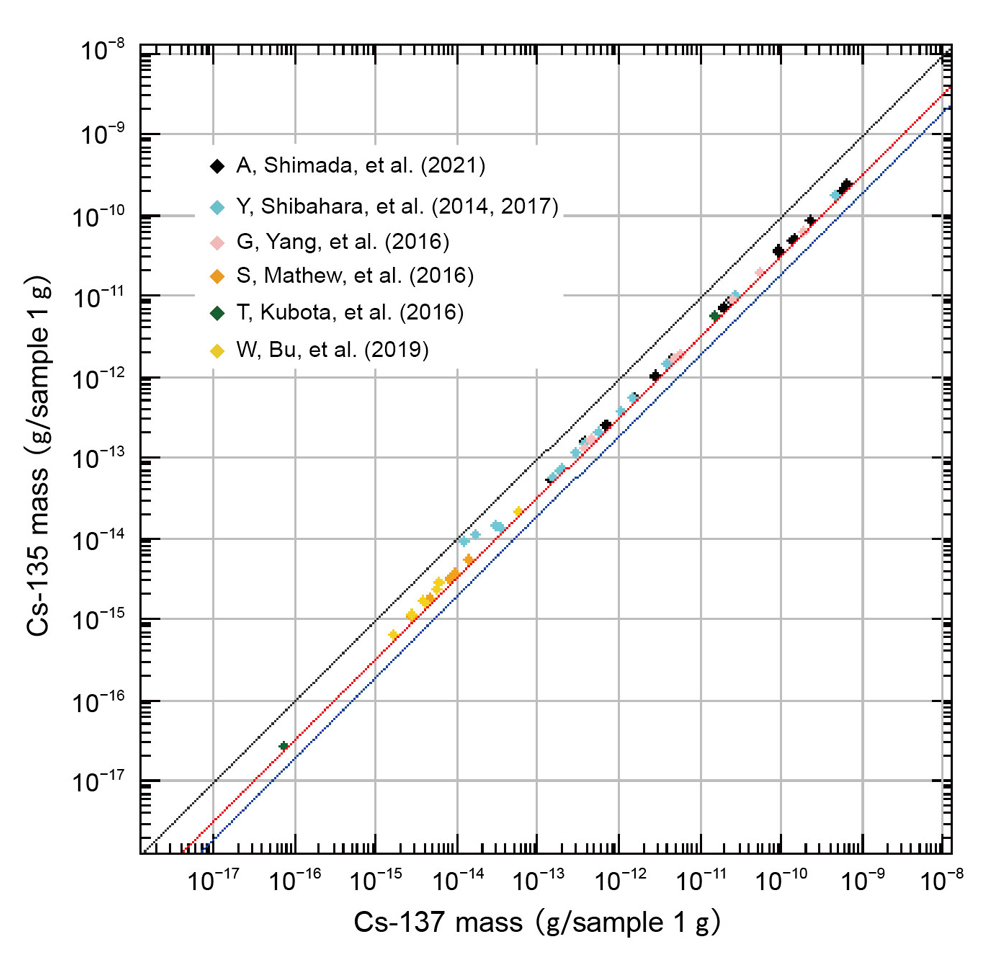
Fig. 2 Application results for Cs-135

If you have any comments or feedback about this page, please click the button to share your thoughts with us.