Publication Date: January 21, 2026
Access counts:0
Measuring Radioactive Strontium in High Gamma Ray Environments Using Cherenkov Emission in a Liquid Optical Fiber
-In-Situ Direct Detection of Radioactive Strontium Inside the Fukushima Daiichi Nuclear Power Station Unit 3 Reactor Building-
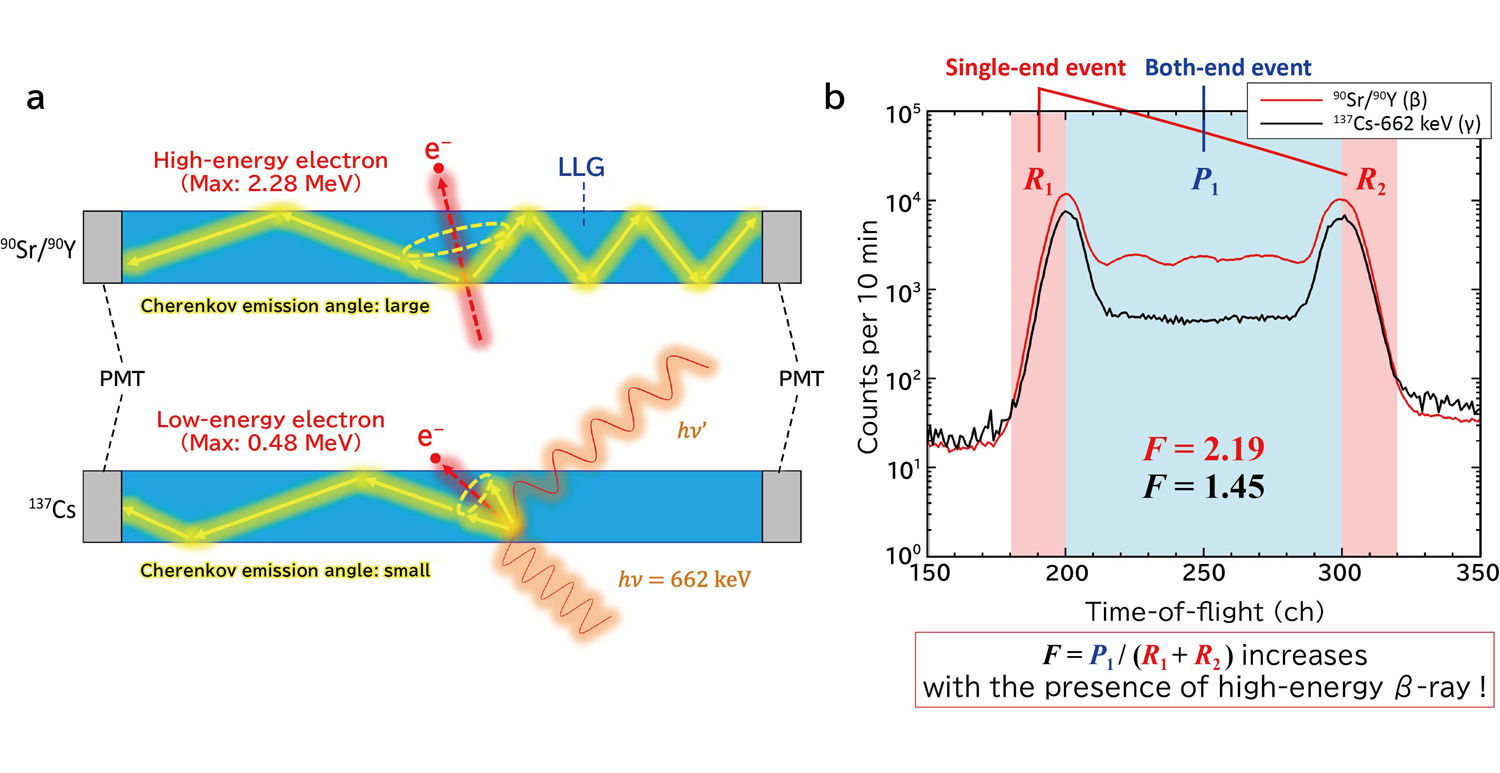
Fig. 1 (a) Principle of 90Sr/90Y detection using Cherenkov emission, (b) example of measurement results for 90Sr/90Y and 137Cs
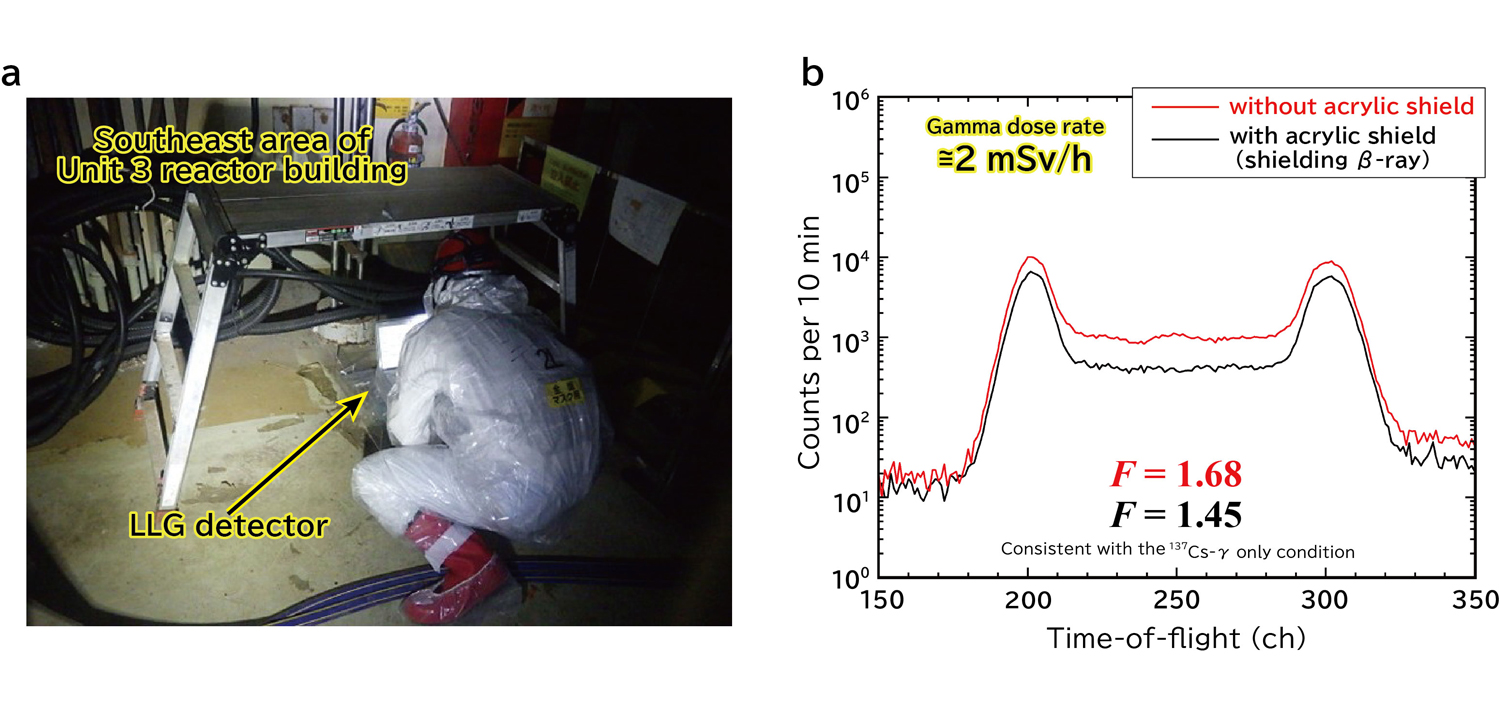
Fig. 2 (a) On-site demonstration test on the first floor of the Fukushima Daiichi Nuclear Power Station Unit 3 reactor building, (b) results of the demonstration test
At the decommissioning site of the TEPCO’s Fukushima Daiichi Nuclear Power Station (1F), it is essential to accurately evaluate the spatial distribution of radioactive nuclides to reduce worker exposure and understand contamination conditions. Among these nuclides, radioactive strontium (90Sr/90Y), a pure beta emitter, is particularly important for assessing eye-lens dose and understanding accident progression. However, directly measuring 90Sr/90Y inside the 1F reactor buildings—where gamma-ray background levels are extremely high—is challenging. As a result, current evaluations rely on indirect methods such as smear sampling, leaving the detailed distribution largely unknown.
In this study, we developed a new direct measurement technique that discriminates between gamma rays from 137Cs and high-energy beta particles from 90Sr/90Y by analyzing the time-of-flight differences of Cherenkov photons generated in a liquid light guide (LLG), an optical fiber with a liquid core. Figures 1 (a) and (b) show the principle and an example of the measurement results. Cherenkov light is detected using photomultiplier tubes installed at both ends of the LLG, and the contribution of high-energy beta particles is extracted using the ratio F—the fraction of events in which Cherenkov photons reached both ends of the LLG relative to those that reached only single end—based on differences in Cherenkov emission angles. Figures 2 (a) and (b) show the measurement setup and results obtained on the first floor of the Unit 3 reactor building at 1F. Compared with measurements performed with an acrylic shield that shields beta particles (gamma-only condition), measurements without the shield exhibited not only a higher count rate but also a clear increase in the F value. These findings demonstrate the world’s first successful in-situ, direct detection of 90Sr/90Y inside the 1F reactor building.
This achievement is also effective for identifying fixed contamination that cannot be quantified by smear sampling and is expected to contribute to the practical deployment of rapid radioactive-strontium detection technologies in future decommissioning operations.

If you have any comments or feedback about this page, please click the button to share your thoughts with us.