Publication Date: April 14, 2026
Access counts:0
Reducing Computational Cost for 3D Model Generation of Decommissioning Environments
-An Image Selection Method Using Redundancy Removal from an Image Sequence-
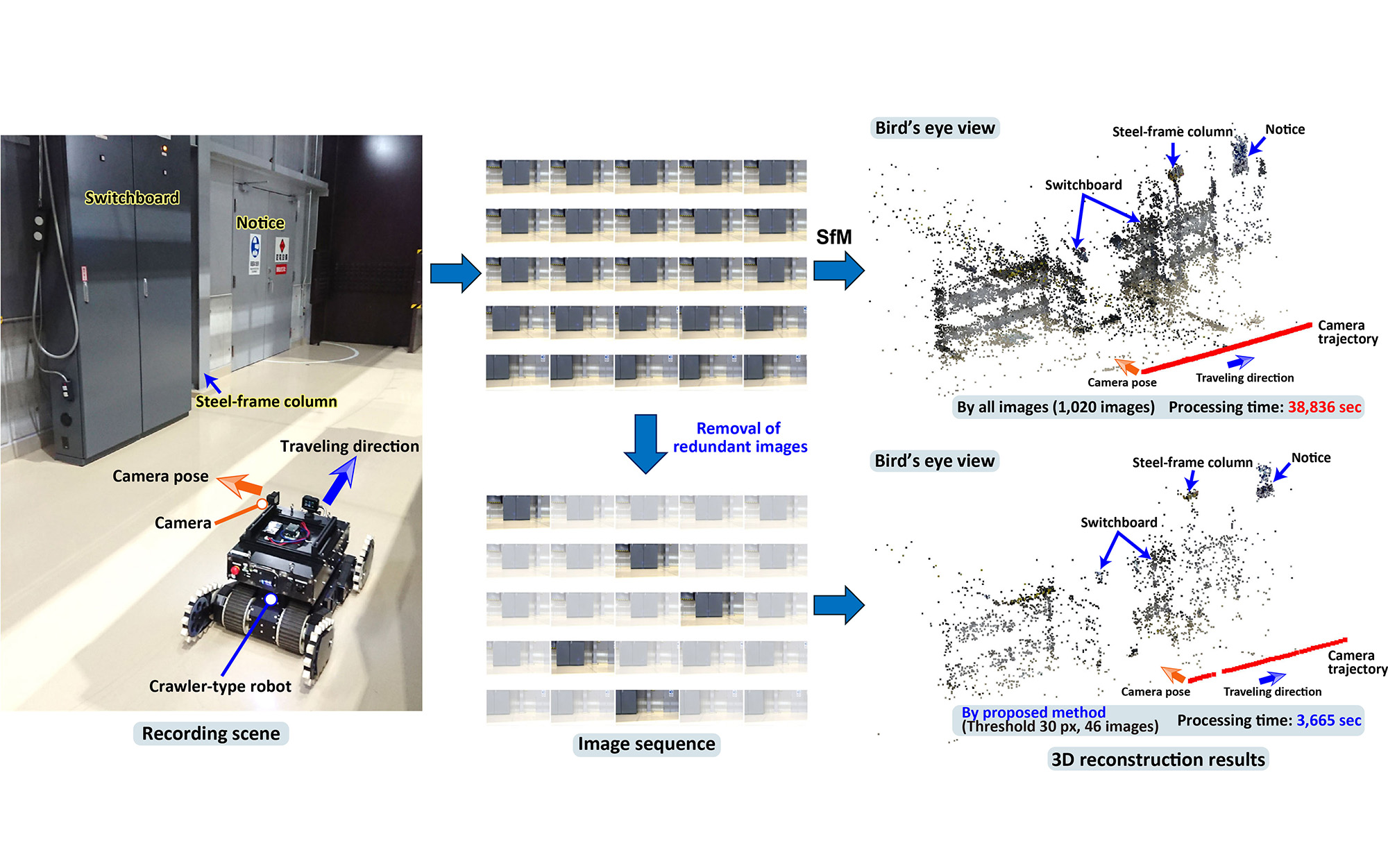
Fig. 1 A recording scene and 3D reconstruction results by the proposed image selection method
In the decommissioning work of the TEPCO's Fukushima Daiichi Nuclear Power Station, particularly inside the Primary Containment Vessel, remotely operated robots equipped with cameras are utilized due to high radiation levels. Understanding the spatial layout of structures in the working environment at the decommissioning site is crucial for planning tasks and supporting remote operations. Therefore, we have developed an image selection method to efficiently generate 3D models from image sequences obtained by robots.
Structure from Motion (SfM), a method for generating a 3D model from images, increases computational cost as the number of images increases. Furthermore, due to safety constraints, the remotely operated robots frequently stop, resulting in image sequences that include many redundant images, such as low-disparity images. The redundant images negatively affect computational cost and 3D reconstruction accuracy. To address this issue, we have proposed an image selection method that efficiently removes redundant images using optical flow, which represents the apparent displacement between images, together with a fixed threshold. The proposed method reduced the number of images used in SfM to approximately 5 % while decreasing computational time to approximately 10 % compared to using all images in the sequence (Fig. 1).
The proposed method is effective for understanding the spatial layout of structures in the working environment at the decommissioning site. It is expected to contribute to rapid 3D model generation in future decommissioning work.

If you have any comments or feedback about this page, please click the button to share your thoughts with us.