Publication Date: April 15, 2026
Access counts:0
Development of HCl-Free Rapid Analytical Method for Difficult-To-Measure Radionuclides via ICP-MS/MS
-Measurement of 79Se in Concrete Rubble-
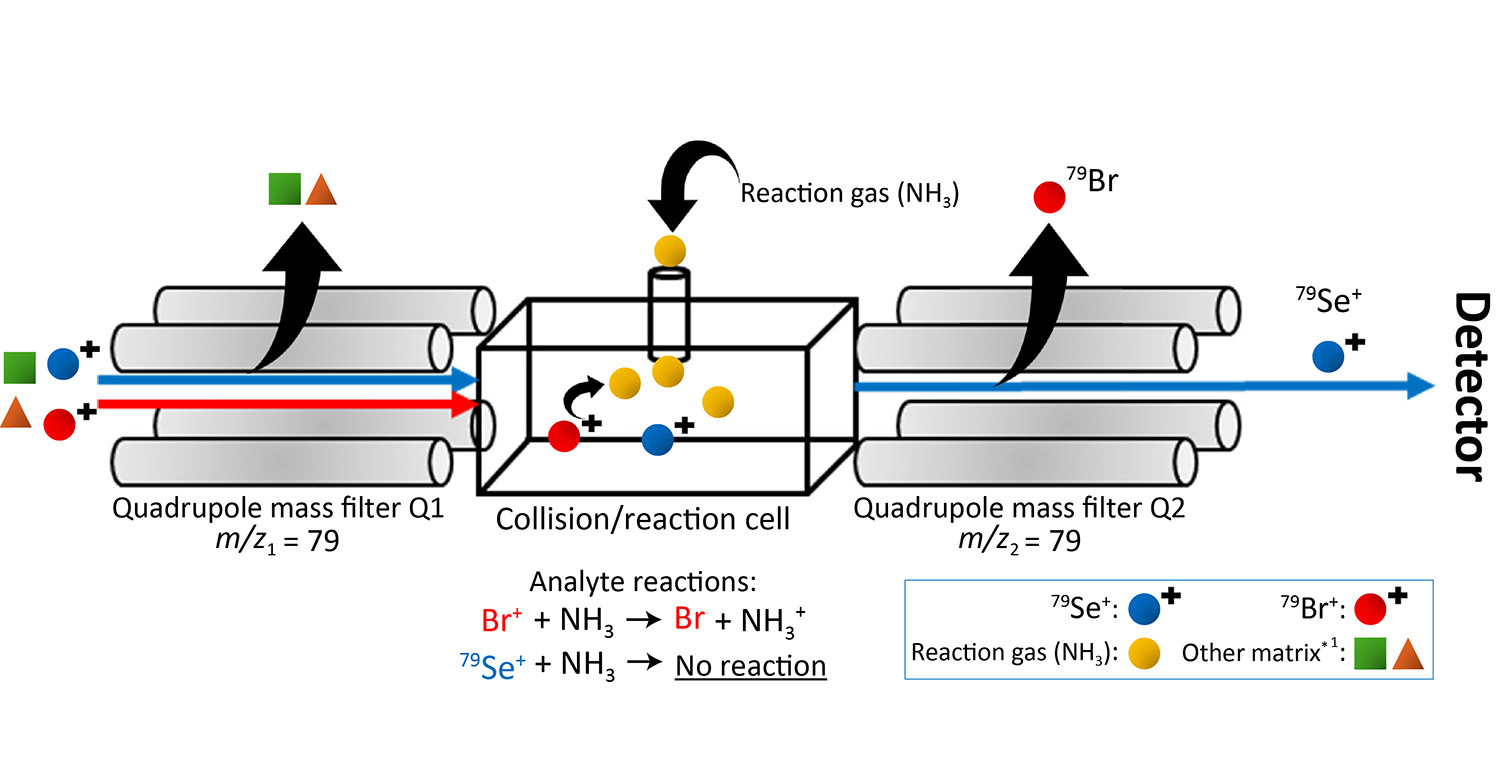
Fig. 1 Schematic of the ICP-MS/MS reaction mechanism for 79Se analysis using NH3 gas
*1 "Other matrix" refers to elements and radionuclides constituting the concrete matrix (e.g., Na, Al, 137Cs, 90Sr)
Rapid and reliable radionuclide inventory assessment is essential for the disposal of the large volume of radioactive waste generated by the TEPCO’s Fukushima Daiichi Nuclear Power Station (FDNPS) accident. However, rapid assessment of 79Se, a critical nuclide for environmental impact, has been challenging. Conventional radiation method requires not only extended counting times due to its long half-life but also laborious chemical separation to remove interfering co-existing nuclides.
At the Okuma Analysis and Research Center, we have established practical, nuclide-specific analytical methods*2 for difficult-to-measure radionuclides*3. These methods combine hydrochloric acid (HCl)-free solid phase extraction with inductively coupled plasma tandem mass spectrometry (ICP-MS/MS) to simplify and accelerate analysis while reducing the burden on analytical facilities associated with corrosion. In this study, we applied the same concept to 79Se and developed a practical analytical procedure.
79Se was separated and purified from the concrete matrix via stepwise chemical separation using anion exchange resin and activated alumina. Measurements were performed using ICP-MS/MS using ammonia (NH3) as the reaction gas. Interferences, including the 79Br isobar and argon-based polyatomic ions, were effectively reduced (Fig. 1). Consequently, the combination of chemical separation and ICP-MS/MS measurement suppressed the 79Br interference signal to approximately one ten-millionth of its original intensity.
The method limit of detection (MLOD)*4 of this method was 0.1 Bq g−1. In addition to being sensitive enough to be well below the proposed regulatory limit*5 of 23 Bq g−1 for trench disposal, the analysis can be completed within a few days, and a substantial reduction in analysis time is expected compared to conventional methods. Based on these results, the effectiveness of this method for FDNPS waste analysis was confirmed.
*2 i.e., Routine methods for waste inventory assessment
*3 e.g., 93Zr, 93Mo, and 126Sn
*4 MLOD when using an approximately 1 g test portion (concrete sample)
*5 Japan Nuclear Safety Commission, Radioactivity Concentration Upper Limit for the Disposal of Low-Level Radioactive Solid Waste, 2007, Reference Materials 3, Table 13, p.3–21 (in Japanese).
Nuclear Regulation Authority (NRA) Digital Archive: https://www.da.nra.go.jp/detail/NRA093215158

If you have any comments or feedback about this page, please click the button to share your thoughts with us.