Publication Date: January 8, 2026
Access counts:0
How Does Cesium Adsorb onto Soil?
-Unveiling the Nanoscale World Through High-Precision Simulations and Experiments-
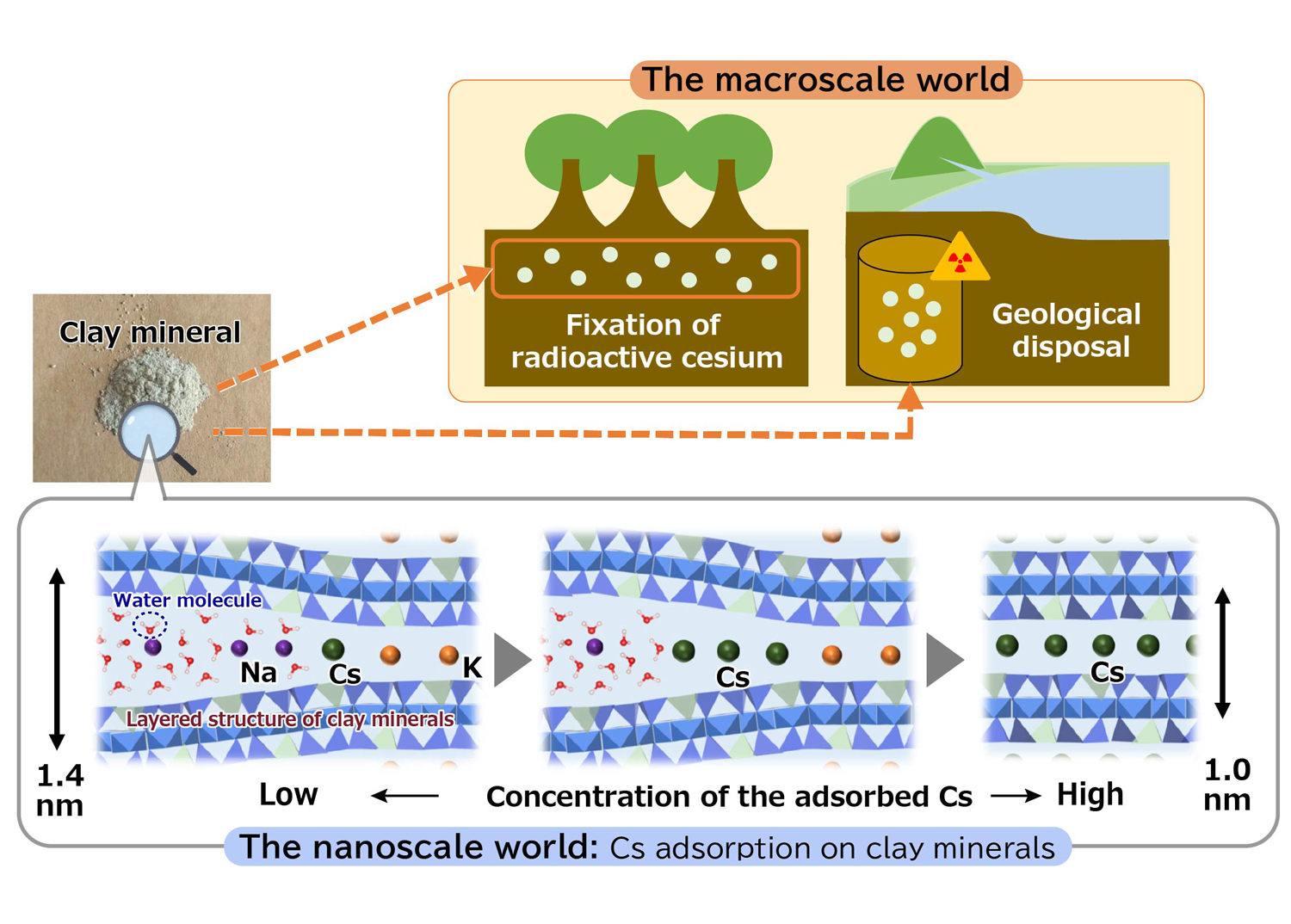
Fig. 1 The role of clay minerals and their nanoscale structures
Radioactive cesium (Cs) released from a nuclear power plant accident has remained in the surface layer of soil due to its strong adsorption onto clay minerals in the soil. However, the adsorption behavior of Cs onto clay minerals is complex, and many aspects remain unclear. One such aspect is the concentration dependence of Cs adsorption, in which the adsorption structure is thought to change with Cs concentration.
In this study, we successfully captured the nanometer-scale structure of Cs-adsorbed clay (one-billionth of a meter) by combining X-ray Absorption Fine Structure (XAFS) spectroscopy with first-principles calculations performed using a supercomputer (Fig. 1). Our findings revealed that as Cs concentration increases, the layered structure of clay minerals undergoes contraction in a manner resembling the closing of a zipper. Furthermore, although Cs is adsorbed through relatively weak ionic interactions, it is nonetheless strongly retained due to the influence of the nanoscale structure formed between the layers of the clay minerals.
This discovery provides new insights that will improve the accuracy of predictions of Cs behavior in the natural environment. It is also expected to contribute to the safer management and disposal of radioactive waste involving Cs and clay minerals.
Click for more details
Ions adsorbed in the interlayers of clay minerals can be exchanged with ions in solution. Therefore, when clay minerals come into contact with a solution containing Cs ions, the Cs ions exchange with ions such as Na that are adsorbed in the interlayers of the clay minerals and become adsorbed there. In addition, clay minerals such as vermiculite have the property of swelling and shrinking in their layers. When the layers are swollen, the interlayer ions are hydrated, whereas when the layers shrink, they are dehydrated. Cs ions tend to dehydrate easily and have a relatively large ionic radius, so when they are adsorbed in the interlayers, they dehydrate and fit snugly into the vacancies in the clay mineral layer structure. Because this adsorption structure is stable, Cs is considered to be strongly adsorbed by clay minerals.
Yamaguchi, A. et al., Molecular Geochemistry of Radium: A Key to Understanding Cation Adsorption Reaction on Clay Minerals, Journal of Colloid and Interface Science, vol.661, 2024, p.317–332.

If you have any comments or feedback about this page, please click the button to share your thoughts with us.