Publication Date: September 8, 2026
Access counts:0
A Novel Hydrogen- and Formate-Producing Microorganism Discovered Deep Underground
-How Biomethane Is Produced 350 m Underground in Horonobe, Hokkaido-
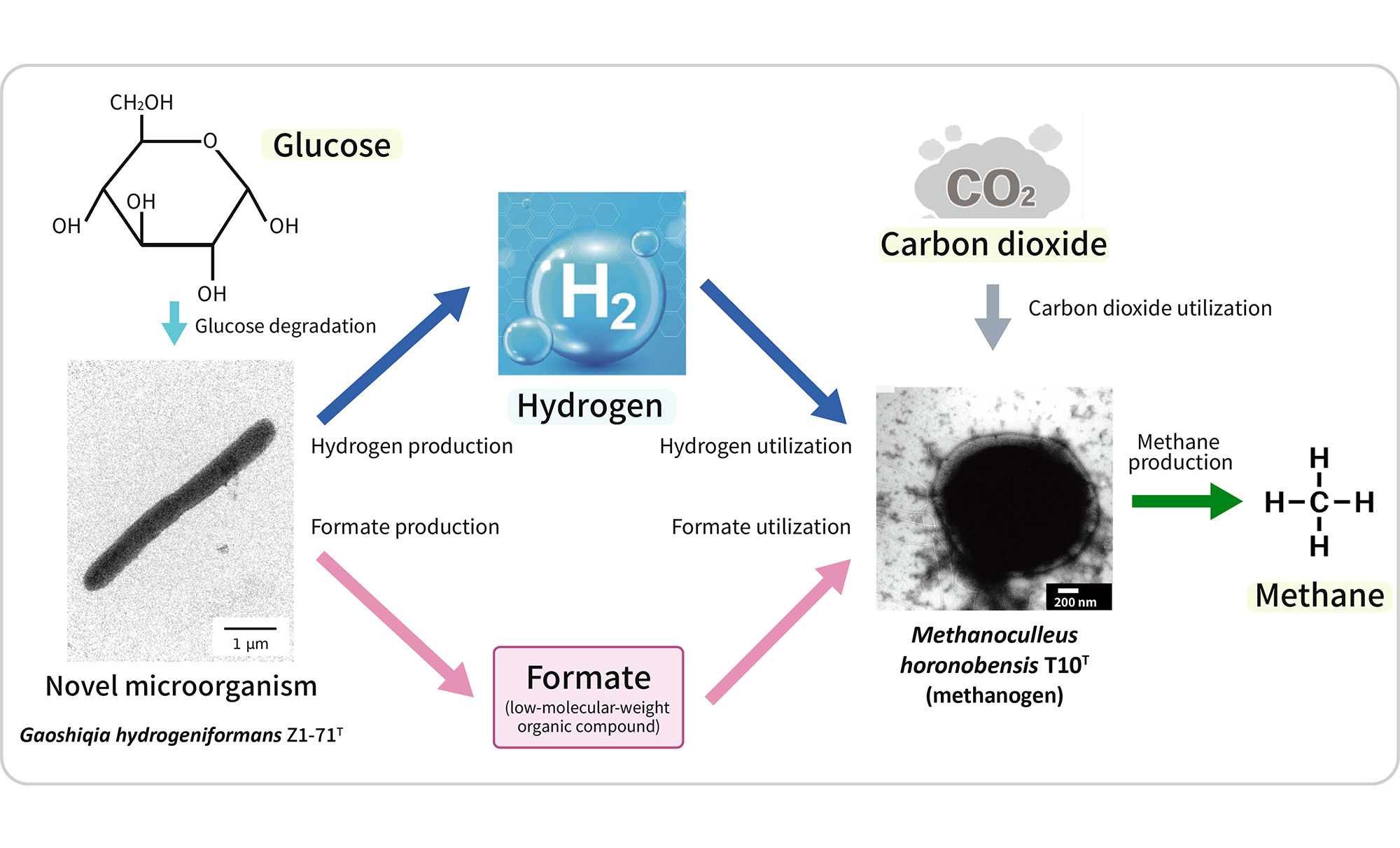
Fig. 1 Mechanism of Methane Production by Two Microorganisms (Inferred from Co-culture Experiments)
The deep subsurface is home to a diverse range of microorganisms, many of which remain unknown. Because it is difficult to collect samples and cultivate microorganisms in deep subsurface environments where oxygen is scarce, how these microorganisms live and what substances they produce remain poorly understood.
At the Horonobe Underground Research Center, we took advantage of the underground research facility, which allows deep groundwater to be sampled, to investigate microorganisms in collaboration with the Horonobe Research Institute for the Subsurface Environment and Hiroshima University. In addition to culture experiments, we analyzed the genes needed to identify the microorganisms and their complete genetic information (genomes). This led to the discovery of Gaoshiqia hydrogeniformans strain Z1-71T, a novel microorganism that produces hydrogen and formate.
This microorganism breaks down glucose to produce hydrogen and formate. When strain Z1-71T was cultured together with methanogenic strain T10T, isolated from the same geological formation, strain T10T used the hydrogen and formate produced by strain Z1-71T to generate biomethane (methane produced through microbial activity). Under the conditions used in this study, methane was not detected when the two strains were cultured separately, showing that the transfer of hydrogen and formate from strain Z1-71T to strain T10T led to methane production (Fig. 1).
These findings advance our understanding of the microorganisms responsible for the production and consumption of hydrogen, formate, and methane, and may be useful, for example, in evaluating how reducing conditions recover after the closure of underground facilities for geological disposal.
Furthermore, underground research facilities can be used to explore previously unknown microbial resources, potentially leading to technologies that harness microbial activity to produce energy resources efficiently.
Keywords

If you have any comments or feedback about this page, please click the button to share your thoughts with us.