Publication Date: September 7, 2026
Access counts:0
Real-Time Monitoring of Sea-Salt Particles Using a Pollen Sensor
-High-Temporal-Resolution Measurement of Airborne Sea Salt for Corrosion Assessment of Coastal Infrastructure-
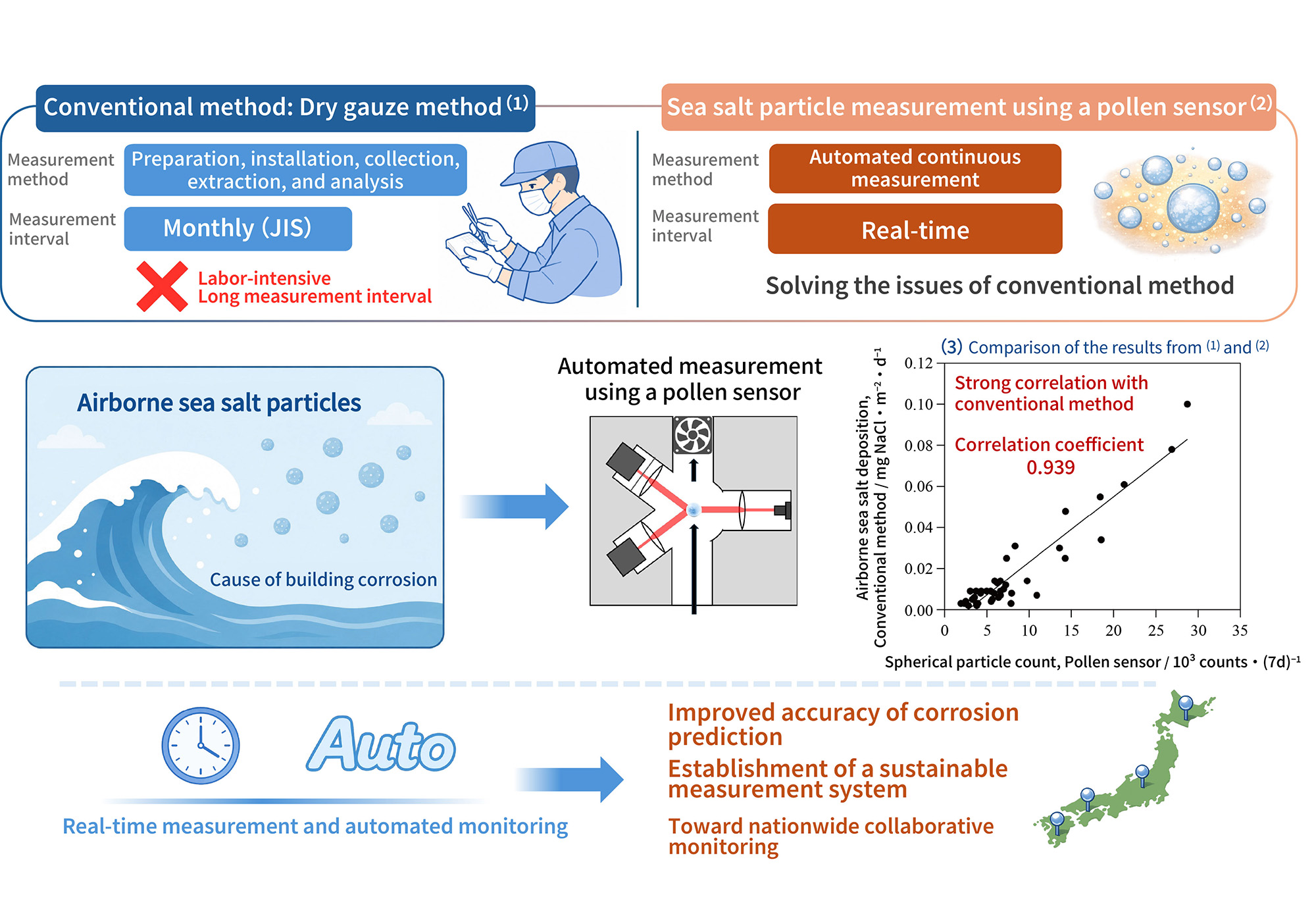
Fig. 1 Overview of the real-time measurement of airborne sea-salt particles using a pollen sensor
Coastal infrastructure is susceptible to atmospheric corrosion due to the inland transport of sea-salt particles. Predicting such corrosion requires measuring the amount of airborne sea salt. However, the conventional dry gauze method relies on the manual installation and retrieval of the gauze, followed by chemical analysis of the collected sea salt. Moreover, the Japanese Industrial Standard JIS Z 2382 specifies a one-month collection period, limiting data acquisition to long intervals.
In this study, we used a commercially available pollen sensor to achieve real-time measurement of airborne sea salt. The sensor irradiates airborne particles with a polarized laser and measures the scattering intensity, which is related to particle size, and the degree of polarization, which reflects particle sphericity. Because sea-salt particles are nearly spherical, the light they scatter retains a high degree of polarization, allowing these particles to be optically distinguished from angular particles, such as dust, and from larger pollen grains.
The pollen sensor and dry gauze methods were operated in parallel for one year at a coastal site. The collection period for the dry gauze method was set to one week, the shortest period that allowed reliable chemical analysis and could be directly aligned with the sensor measurement intervals. The number of spherical particles counted by the pollen sensor exhibited a strong correlation with the results obtained using the conventional dry gauze method (Fig. 1 (3)). This indicated that data obtained using the pollen sensor could serve as an indicator of the atmospheric concentration of airborne sea-salt particles.
The proposed real-time monitoring method for airborne sea salt is expected to improve the prediction of atmospheric corrosion and facilitate advanced corrosion-risk assessment for coastal infrastructure.
キーワード

If you have any comments or feedback about this page, please click the button to share your thoughts with us.