 |
||
|
| Natural rubber latex (the milky white fluid found in rubber-producing
plants containing dispersed particulates of long natural rubber
molecules) after treatment with sulfur powder (and dithiocarbamine
and zinc oxide) will produce rubber products characterized by
high strength and flexibility. However they sometimes become a
cause of trouble, as for example when they cause allergic reactions
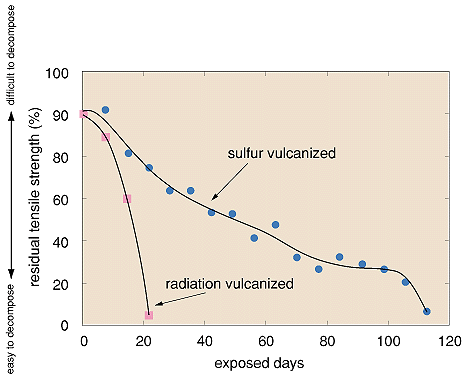
to their users owing to the rubber proteins. Cross-linking of rubber molecules (= vulcanization) can be achieved also by a radiation chemical method. We studied the radiation effect of allergic response and biological adaptability in natural rubber latex as well as changes in the chemical components and molecular weight distribution after irradiation, even from an economical and environmental point of view and thus we proved the advantages of the radiation vulcanization over the conventional one. |
| Reference
K. Makuuchi et al., Allergic Response of Radiation Vulcanized Natural Rubber Latex, Nippon Gomu Kyokai-Shi, 68, 263 (1995). |
| Select a topic in left column |  |
|
Persistent Quest-Research Activities 1996 Copyright(c)Japan Atomic Energy Research Institute |